What Makes a Photograph Worth Living With?
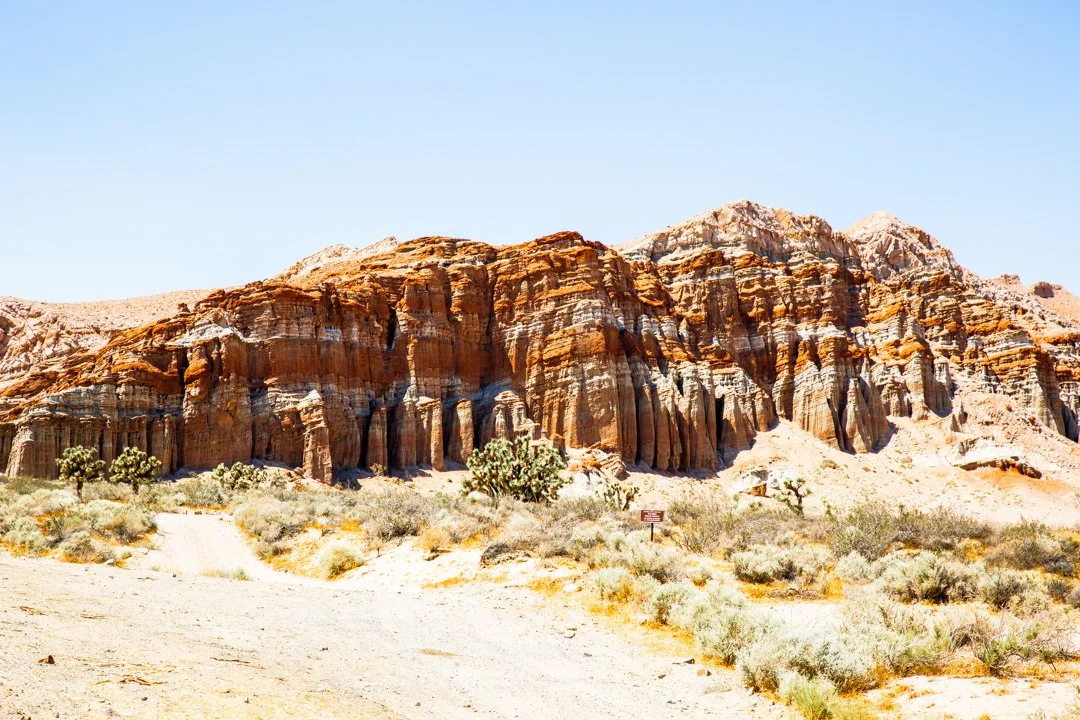
Red Rock Cliffs of the Southwest
There are photographs that immediately capture our attention, and there are photographs that continue to hold it.
We live in a world saturated with images. Every day, we scroll past countless photographs—some created by artists, others generated by artificial intelligence—all competing for our attention. Add in bold colors, dramatic light, and spectacular destinations, and it's easy to believe that a powerful first impression is what makes a photograph truly memorable.
But living with a photograph is a very different experience.
Unlike the images we glance at on our phones for a few seconds, the photographs we choose to hang in our homes become part of our everyday lives. We pass them each morning. We notice how they change as the light moves through the room. Sometimes we stop and study them. Other times, they quietly exist in the background until, weeks or even years later, we notice something we hadn’t seen before.
For me, a photograph worth living with isn't one that demands your attention every time you see it. It's one that quietly rewards you for coming back to it.
A Photograph Should Invite You Back
The photographs I return to most often are rarely the ones that reveal everything at first glance.
Instead, they reward curiosity.
Each time I come back to them, I notice something I hadn't seen before.
A subtle shift in light.
An overlooked texture.
A quiet relationship between shapes.
The photograph hasn't changed.
I have.
Perhaps that's one of the reasons I enjoy living with photography. The longer I spend with an image, the more opportunities it has to surprise me.
I've found that the same qualities that reward patience while making a photograph often reward patience while living with one.
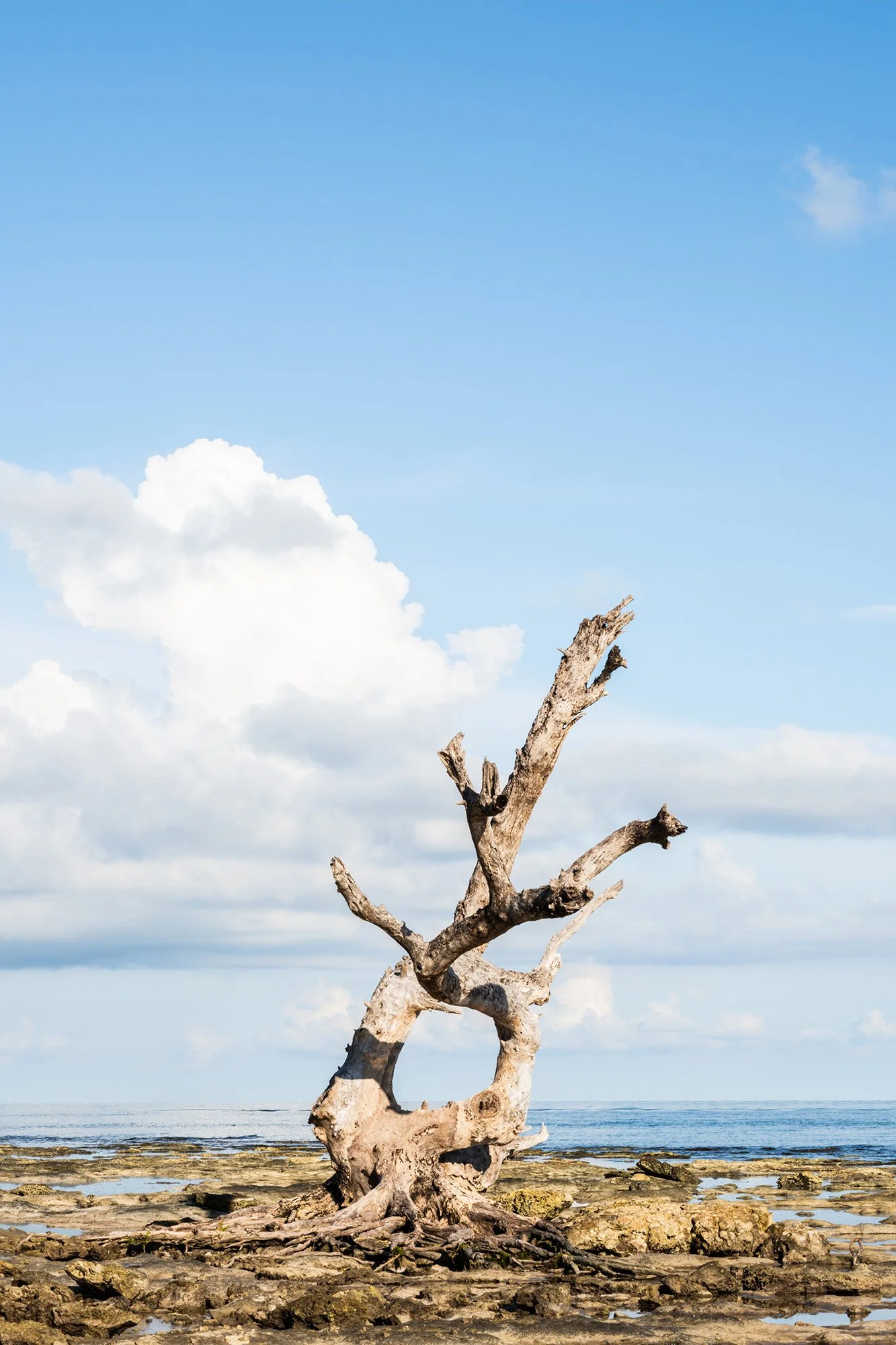
Weathered Sentinel at Low Tide
Quiet Photographs Have a Long Life
We live in a time when almost every image is competing for our attention.
Social media rewards photographs that stop us mid-scroll. Bigger skies. Brighter colors. More dramatic light. Even artificial intelligence can now generate scenes designed to be more spectacular than reality.
There's nothing inherently wrong with that.
Some dramatic photographs are genuinely extraordinary.
But over the years, I've found myself drawn to a different kind of image.
The photographs I return to are usually quieter.
They don't compete with the room they're in.
They don't demand my attention every time I walk past.
Instead, they invite me to slow down.
To notice.
To reflect.
I think that's why they stay with us for so long.
Rather than overwhelming the space, they become part of it.
That philosophy has shaped much of my own work. I don't photograph landscapes simply because they're dramatic. I'm more interested in the quieter moments—when light, atmosphere, and composition come together in a way that feels natural rather than forced.
The Photographs That Grow With Us
One of the things I find most fascinating about living with art is that the artwork itself never changes.
The print on the wall is exactly the same as the day it was framed.
But we aren't.
As life moves forward, so do we.
Our experiences deepen. Our memories become richer. The way we see the world quietly shifts, often without us realizing it.
Because of that, a photograph can mean something entirely different years after we first bring it home.
A landscape that once reminded us of a memorable trip may later remind us of a different season of life. A photograph that once brought a sense of calm might eventually evoke gratitude, nostalgia, or even longing.
The image hasn't changed.
We have.
And perhaps that's one of the quiet gifts of living with photography.
The longer a photograph shares our lives, the more our own experiences become part of the way we see it.

Voidokilia Reflection
Simplicity Leaves Room to Breathe
When I edit my own work, I usually end up taking things out instead of adding more.
I simplify compositions.
I wait for softer light.
I look for fewer distractions.
It's not that simplicity is easier. It gives the viewer room to slow down and discover the photograph at their own pace.
When every part of a photograph competes for attention, our eyes quickly become tired.
But when a composition feels balanced and intentional, we can return to it again and again without feeling overwhelmed.
I value that sense of visual breathing room, both in my photography and in the spaces where photographs are displayed.
Choosing Photographs That Grow With You
Choosing a photograph for your home is about more than filling an empty wall.
It's an invitation to live with an image—to see it in the changing light of morning, to pass it every day, and to let it quietly become part of your surroundings.
The photographs that stay with us are often the ones that continue to reveal something over time.
Perhaps it's the quality of light.
Perhaps it's a detail you hadn't noticed before.
Perhaps it's a memory the image awakens.
Or perhaps it's simply the sense of stillness it brings to a room.
Whatever the reason, the photographs we return to most often are rarely the ones that demanded our attention from the beginning.
They're the ones that continue to reward it.
For me, those are the photographs worth living with.
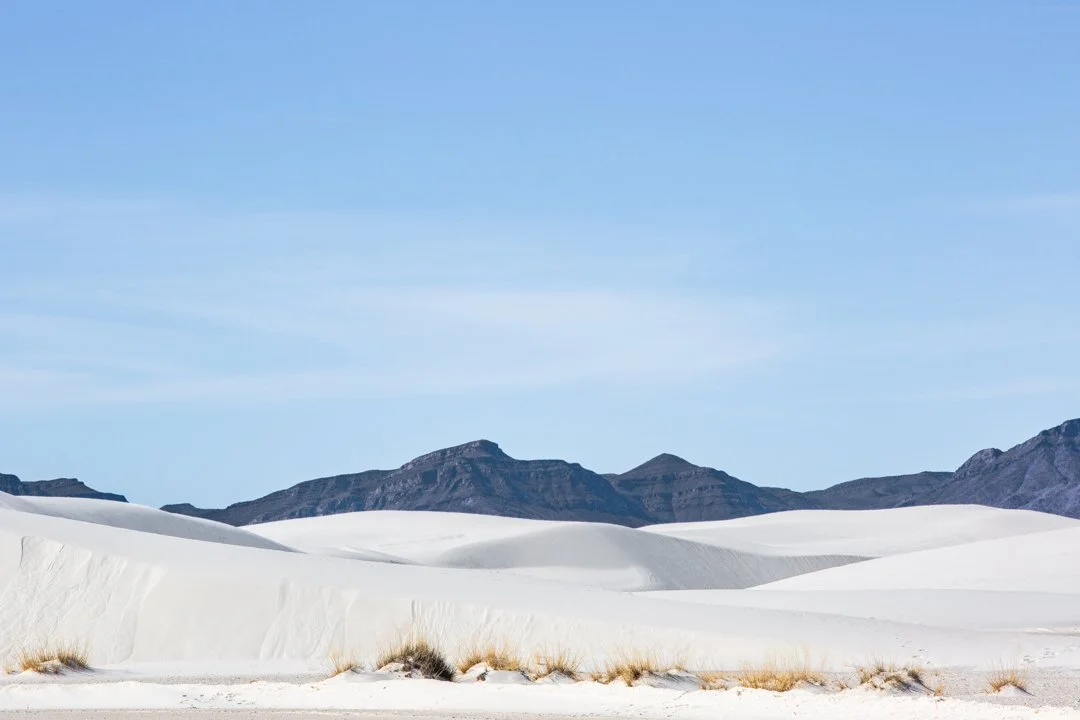
White Sands and Distant Mountains
Final Thoughts
I don't create photographs with the hope that they will make someone pause for a few seconds.
I create them with the hope that they will continue to reward attention long after that first impression has faded.
Over the years, the landscape has taught me that observation takes time.
The more patiently we look, the more there is to see.
Perhaps living with a photograph should feel the same way.
The best photographs aren't simply looked at.
They're returned to.
Again and again.
And with each return, they quietly become part of the life unfolding around them.