
What Remains in Silence: Photographing Puerto Rico’s Forgotten Places
Six weeks of slow travel through Puerto Rico inspired four distinct collections. What Remains in Silence explores abandoned architecture, historic ruins, and the quiet traces time and nature leave behind.
Earlier this year, 2026, my wife and I spent six weeks in Puerto Rico. The trip was partly a test run for the longer periods of slow travel we are planning through Central and South America. It gave us a chance to experience what it would feel like to stay in one place without the usual pressure to see everything before it was time to return home.
What I discovered was how peaceful slow travel can be.
We spent most of our time in northwestern Puerto Rico, including Quebradillas, Aguadilla, Aguada, and Añasco, with another portion of the trip on Vieques. Moving at a slower pace gave me time to decide what I wanted to photograph—and, just as importantly, when I wanted to photograph it.
Instead of collecting as many locations as possible, I could return, wait for the right conditions, and pay closer attention to the places that kept drawing me back.
Over those six weeks, I created a broad and varied body of work that eventually developed into four distinct collections. Each reflects a different aspect of my experience in Puerto Rico. What Remains in Silence is one of those collections—a black-and-white study of abandoned architecture, historic ruins, and the traces that time and nature have left behind.
Discovering What Time Has Left Behind
Although Vieques was the most visited of the places where we stayed, much of the island felt removed from the pace of modern tourism. Away from the busier areas, narrow roads curved through dense vegetation. Some became dirt roads marked by holes large enough to make every drive an exercise in patience.
Across the island, the landscape quietly reclaimed what had been abandoned. Vegetation covered old military bunkers, unused structures, and fragments of a former era. Buildings that once served a clear purpose now stood partially concealed by trees and vines.
Among them was the Central Playa Grande sugar mill.
Finding the ruins took three attempts. My wife and I had driven past the site several times without realizing it. No signs directed us to the entrance, and our navigation apps stopped working reliably in that part of the island.
Just as I was ready to give up, I searched for a location pin and discovered that we had been passing the ruins all along. The remains were simply hidden behind the surrounding vegetation.
We found the site on an overcast afternoon. The light was flat, and it was already too late to explore the complex properly, so we decided to return the following morning.
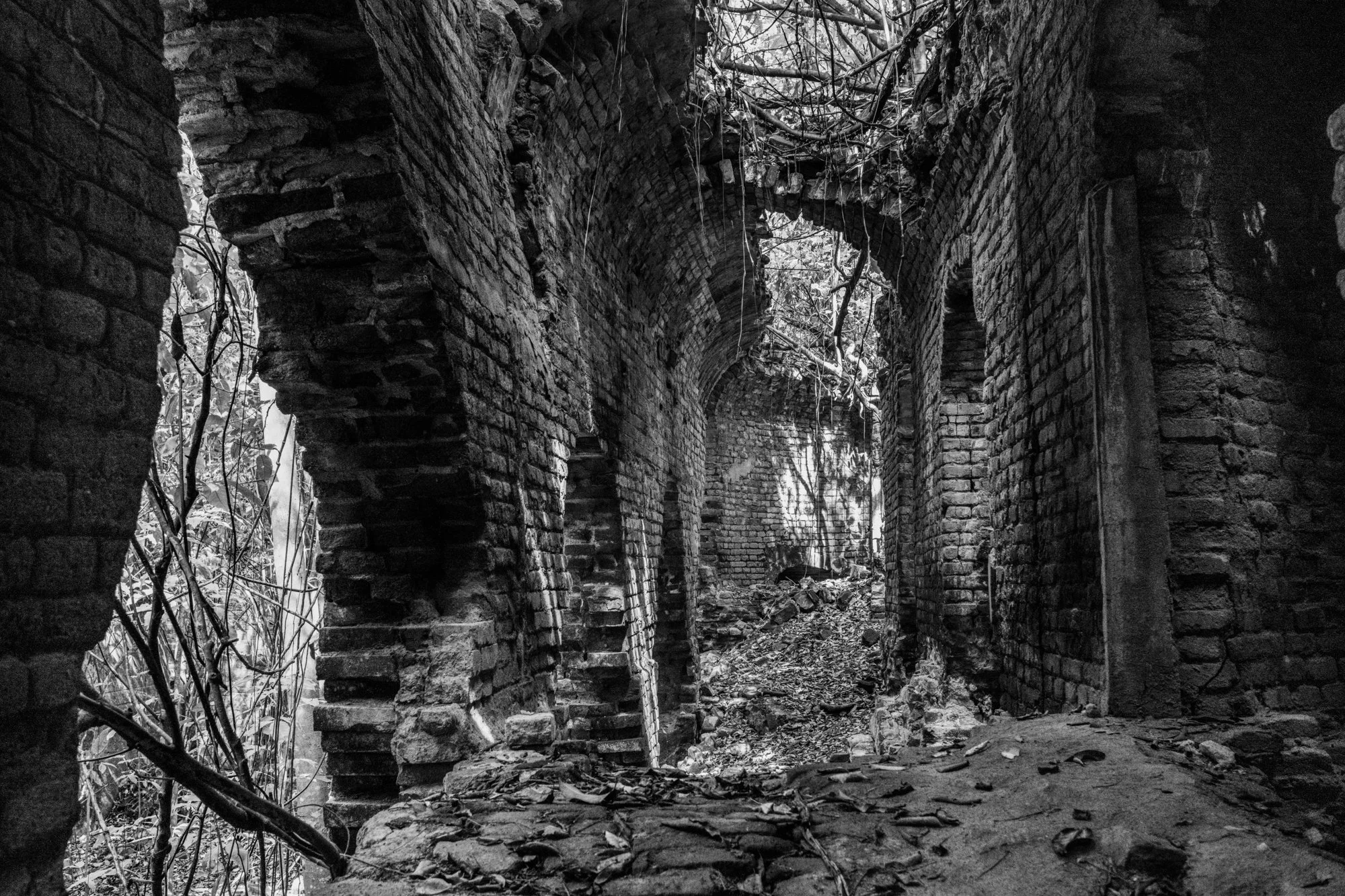
My wife waited in the car while I followed a narrow footpath into the trees. What gradually emerged through the foliage were pieces of a once-massive structure: brick passageways, arched openings, fractured walls, and rooms without roofs. I moved slowly through the ruins, photographing each discovery as the path carried me deeper into the site.
There was a sense that the structure was disappearing even as I stood within it. Only remnants of much of the sugar mill remain, and it may not be long before the landscape reclaims them completely.
Seeing the Photograph Before Making It
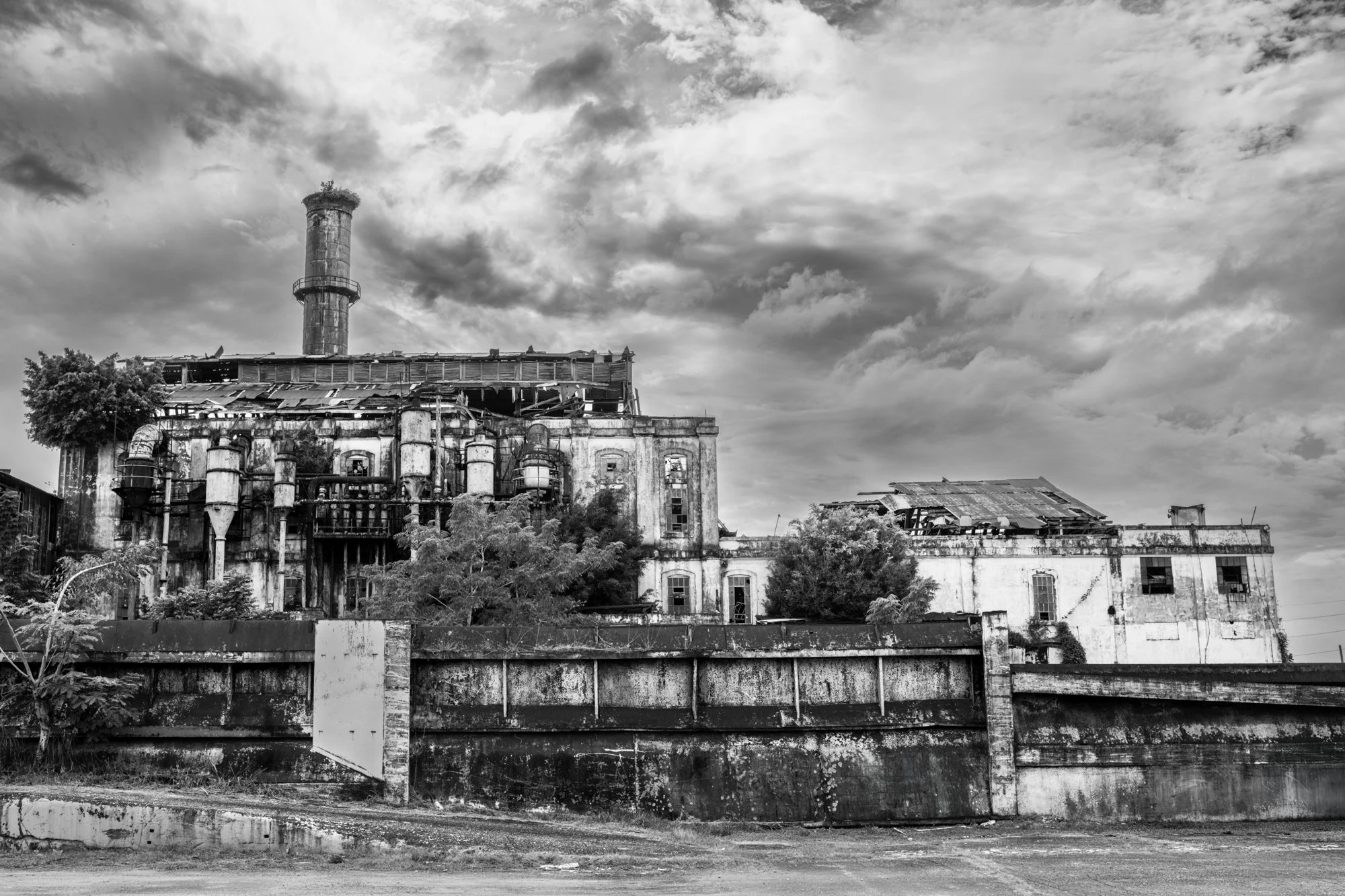
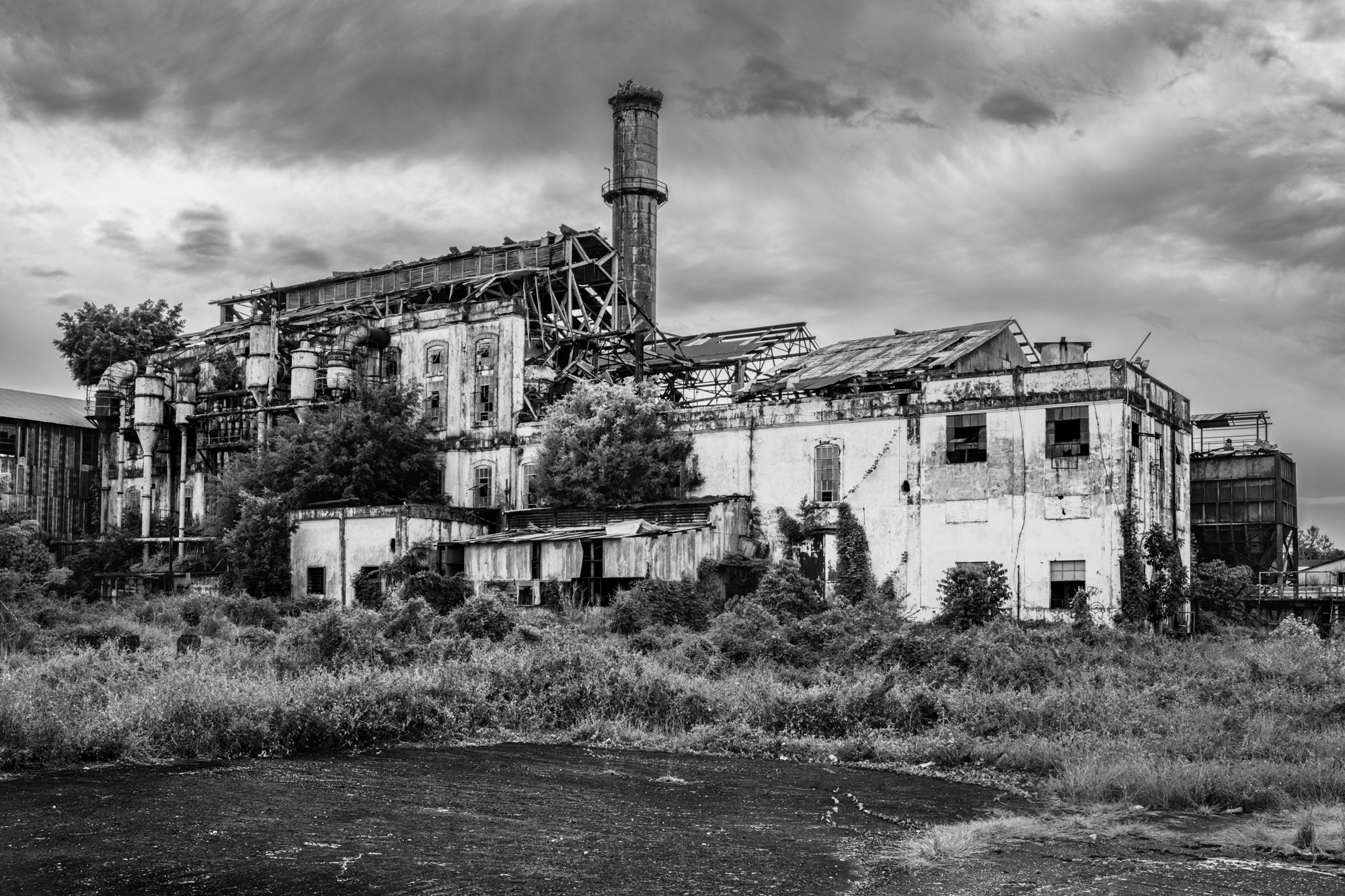
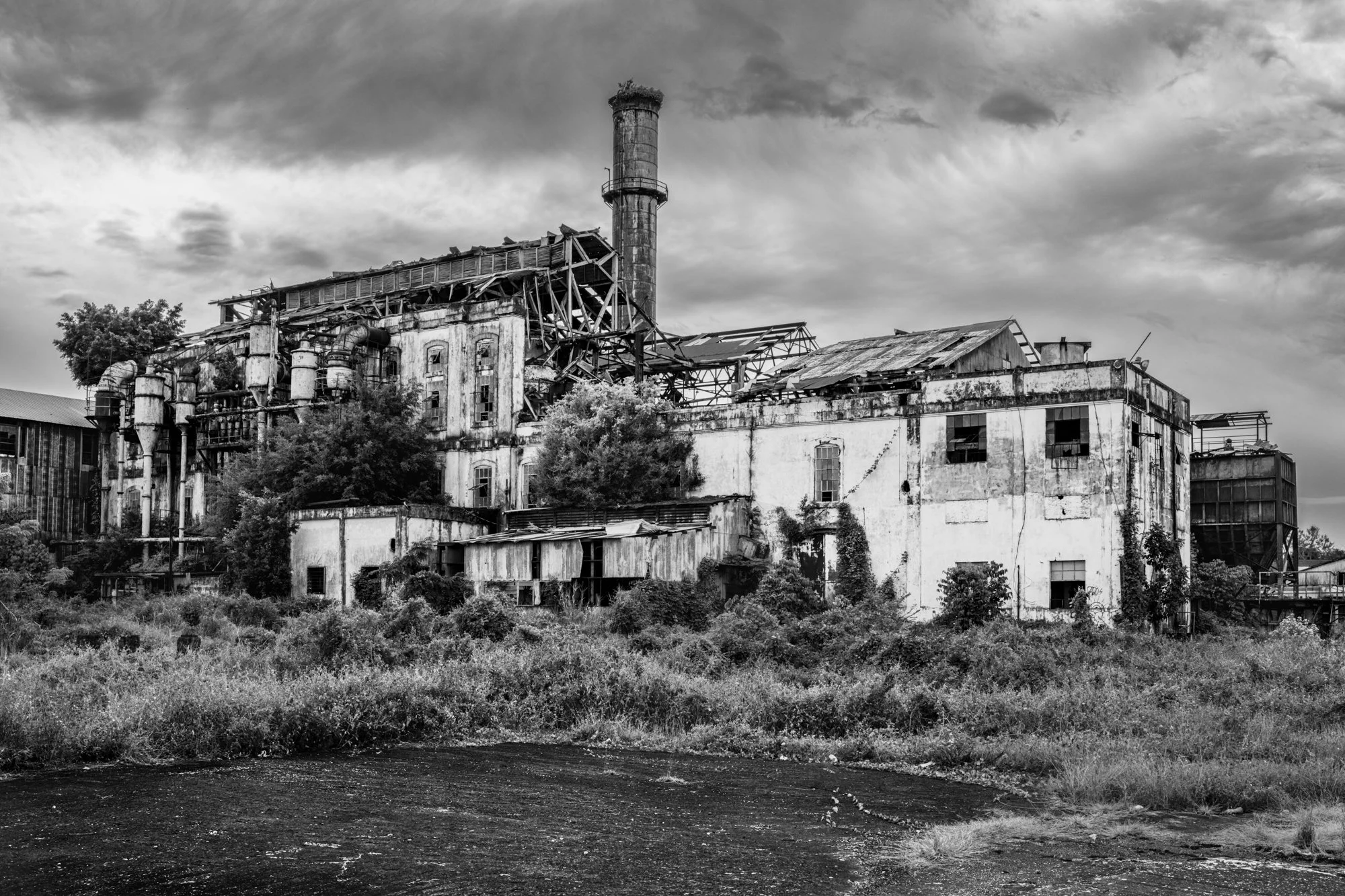
The Central Coloso ruins in Aguada offered a very different experience from the hidden remains on Vieques; the old sugar mill was clearly visible from the road.
The first time I passed it, I knew I wanted to photograph it. I could already see the finished image in black and white: the weathered industrial structure, the tall tower, and the contrast between the building and the sky.
I hadn’t anticipated the dramatic overcast clouds. They gave the ruins a greater sense of presence and brought an atmosphere to the photographs that a clear sky could not have provided. The structure’s darkness and the movement in the clouds seemed to speak to one another.
That light helped shape the collection’s visual language.
Light Inside the Guajataca Tunnel
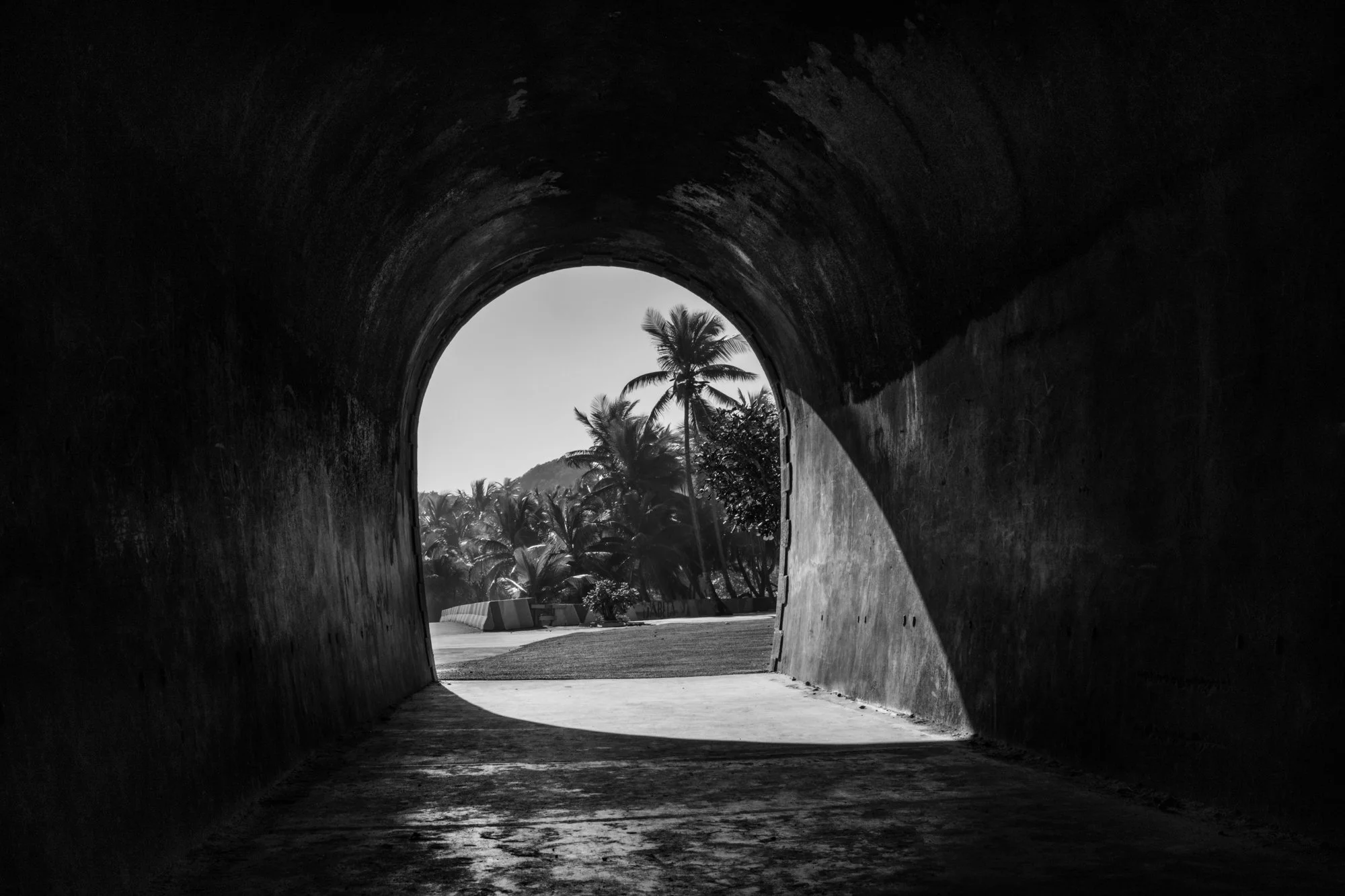
The Guajataca Railroad Tunnel, near the border of Quebradillas and Isabela, is another surviving piece of Puerto Rico’s history. Because it sits beside a public beach, it can become busy with local foot traffic throughout the day.
I arrived early in the morning, before most beachgoers had begun to gather.
Inside the tunnel, the experience changed completely. The bright landscape beyond the entrance was reduced to a carefully framed opening surrounded by darkness. Light curved across the floor, revealing the passage’s shape while leaving much of its surface in shadow.
I was in heaven during that shoot—moving through the tunnel, watching the light and exploring the relationship between darkness, architecture, and the tropical landscape waiting beyond the opening.
Why What Remains in Silence
What Remains in Silence represents one part of the larger photographic body of work I created during those six weeks in Puerto Rico. Of the four collections that emerged, this is the one most concerned with history, abandonment, and the gradual transformation of structures left exposed to time and nature.
As I worked through these photographs, one thought kept returning: some of these places may not remain much longer.
The buildings are deteriorating. Vegetation is advancing. Walls, arches, and industrial structures that have survived for decades are slowly becoming part of the surrounding landscape.
This collection is not intended as a complete historical record of these places. It is a personal response to standing before them—to the stillness I encountered, the marks left by time, and the way light briefly revealed what might otherwise have gone unnoticed.
Presented in black and white, the photographs move beyond the landscape’s immediate colors to focus on texture, form, shadow, and atmosphere. Together, they reflect on what survives, what disappears, and what a photograph can preserve.
What Makes a Photograph Worth Living With?
Some photographs make an immediate impression. Others quietly reveal more with time. In this essay, Antonio Crutchley reflects on why the images we choose to live with often become more meaningful as our lives, memories, and perspective continue to evolve.
Red Rock Cliffs of the Southwest
There are photographs that immediately capture our attention, and there are photographs that continue to hold it.
We live in a world saturated with images. Every day, we scroll past countless photographs—some created by artists, others generated by artificial intelligence—all competing for our attention. Add in bold colors, dramatic light, and spectacular destinations, and it's easy to believe that a powerful first impression is what makes a photograph truly memorable.
But living with a photograph is a very different experience.
Unlike the images we glance at on our phones for a few seconds, the photographs we choose to hang in our homes become part of our everyday lives. We pass them each morning. We notice how they change as the light moves through the room. Sometimes we stop and study them. Other times, they quietly exist in the background until, weeks or even years later, we notice something we hadn’t seen before.
For me, a photograph worth living with isn't one that demands your attention every time you see it. It's one that quietly rewards you for coming back to it.
A Photograph Should Invite You Back
The photographs I return to most often are rarely the ones that reveal everything at first glance.
Instead, they reward curiosity.
Each time I come back to them, I notice something I hadn't seen before.
A subtle shift in light.
An overlooked texture.
A quiet relationship between shapes.
The photograph hasn't changed.
I have.
Perhaps that's one of the reasons I enjoy living with photography. The longer I spend with an image, the more opportunities it has to surprise me.
I've found that the same qualities that reward patience while making a photograph often reward patience while living with one.
Weathered Sentinel at Low Tide
Quiet Photographs Have a Long Life
We live in a time when almost every image is competing for our attention.
Social media rewards photographs that stop us mid-scroll. Bigger skies. Brighter colors. More dramatic light. Even artificial intelligence can now generate scenes designed to be more spectacular than reality.
There's nothing inherently wrong with that.
Some dramatic photographs are genuinely extraordinary.
But over the years, I've found myself drawn to a different kind of image.
The photographs I return to are usually quieter.
They don't compete with the room they're in.
They don't demand my attention every time I walk past.
Instead, they invite me to slow down.
To notice.
To reflect.
I think that's why they stay with us for so long.
Rather than overwhelming the space, they become part of it.
That philosophy has shaped much of my own work. I don't photograph landscapes simply because they're dramatic. I'm more interested in the quieter moments—when light, atmosphere, and composition come together in a way that feels natural rather than forced.
The Photographs That Grow With Us
One of the things I find most fascinating about living with art is that the artwork itself never changes.
The print on the wall is exactly the same as the day it was framed.
But we aren't.
As life moves forward, so do we.
Our experiences deepen. Our memories become richer. The way we see the world quietly shifts, often without us realizing it.
Because of that, a photograph can mean something entirely different years after we first bring it home.
A landscape that once reminded us of a memorable trip may later remind us of a different season of life. A photograph that once brought a sense of calm might eventually evoke gratitude, nostalgia, or even longing.
The image hasn't changed.
We have.
And perhaps that's one of the quiet gifts of living with photography.
The longer a photograph shares our lives, the more our own experiences become part of the way we see it.
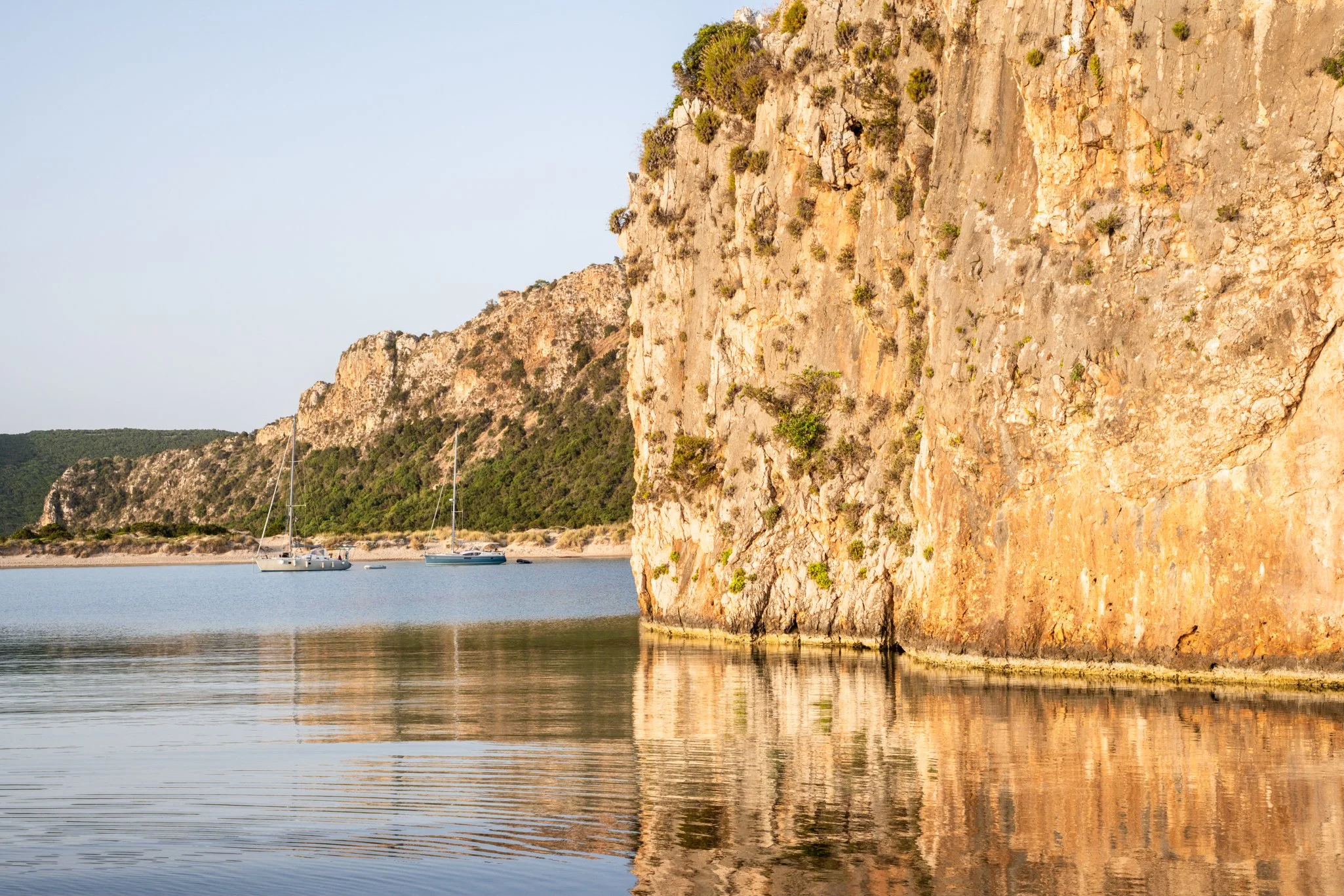
Voidokilia Reflection
Simplicity Leaves Room to Breathe
When I edit my own work, I usually end up taking things out instead of adding more.
I simplify compositions.
I wait for softer light.
I look for fewer distractions.
It's not that simplicity is easier. It gives the viewer room to slow down and discover the photograph at their own pace.
When every part of a photograph competes for attention, our eyes quickly become tired.
But when a composition feels balanced and intentional, we can return to it again and again without feeling overwhelmed.
I value that sense of visual breathing room, both in my photography and in the spaces where photographs are displayed.
Choosing Photographs That Grow With You
Choosing a photograph for your home is about more than filling an empty wall.
It's an invitation to live with an image—to see it in the changing light of morning, to pass it every day, and to let it quietly become part of your surroundings.
The photographs that stay with us are often the ones that continue to reveal something over time.
Perhaps it's the quality of light.
Perhaps it's a detail you hadn't noticed before.
Perhaps it's a memory the image awakens.
Or perhaps it's simply the sense of stillness it brings to a room.
Whatever the reason, the photographs we return to most often are rarely the ones that demanded our attention from the beginning.
They're the ones that continue to reward it.
For me, those are the photographs worth living with.
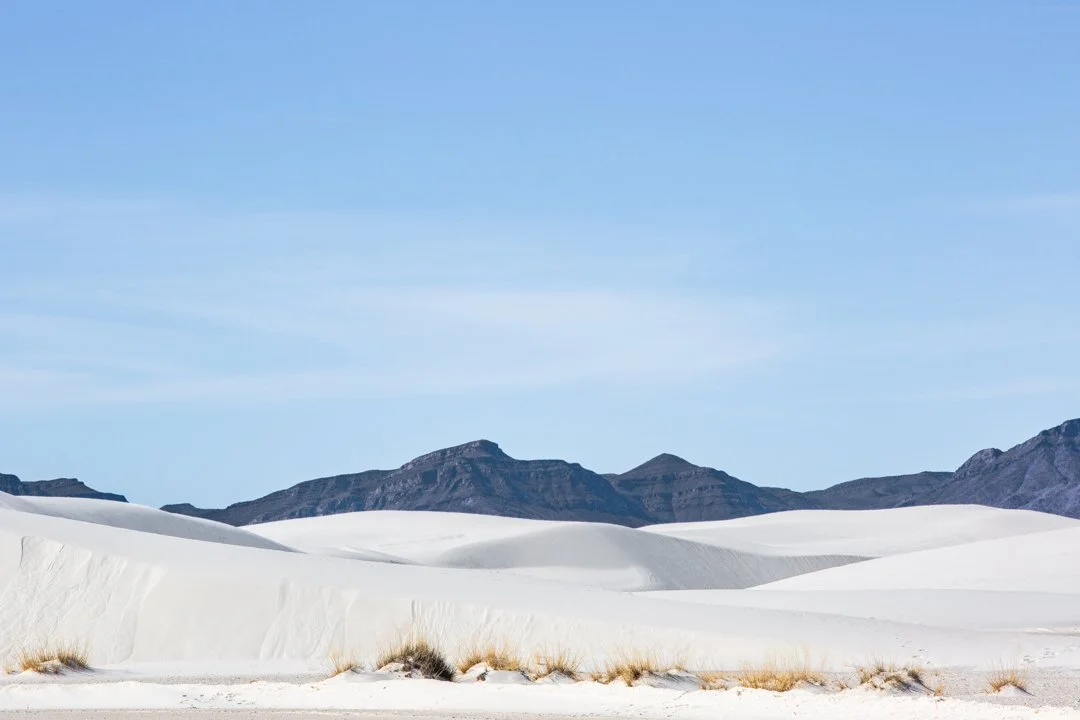
White Sands and Distant Mountains
Final Thoughts
I don't create photographs with the hope that they will make someone pause for a few seconds.
I create them with the hope that they will continue to reward attention long after that first impression has faded.
Over the years, the landscape has taught me that observation takes time.
The more patiently we look, the more there is to see.
Perhaps living with a photograph should feel the same way.
The best photographs aren't simply looked at.
They're returned to.
Again and again.
And with each return, they quietly become part of the life unfolding around them.
Why I Photograph the Same Places More Than Once
Many photographers are drawn to new destinations and unfamiliar landscapes. Over time, I discovered that some of my most meaningful photographs came from returning to familiar places. This reflection explores how revisiting landscapes shaped the way I see, observe, and photograph the world.
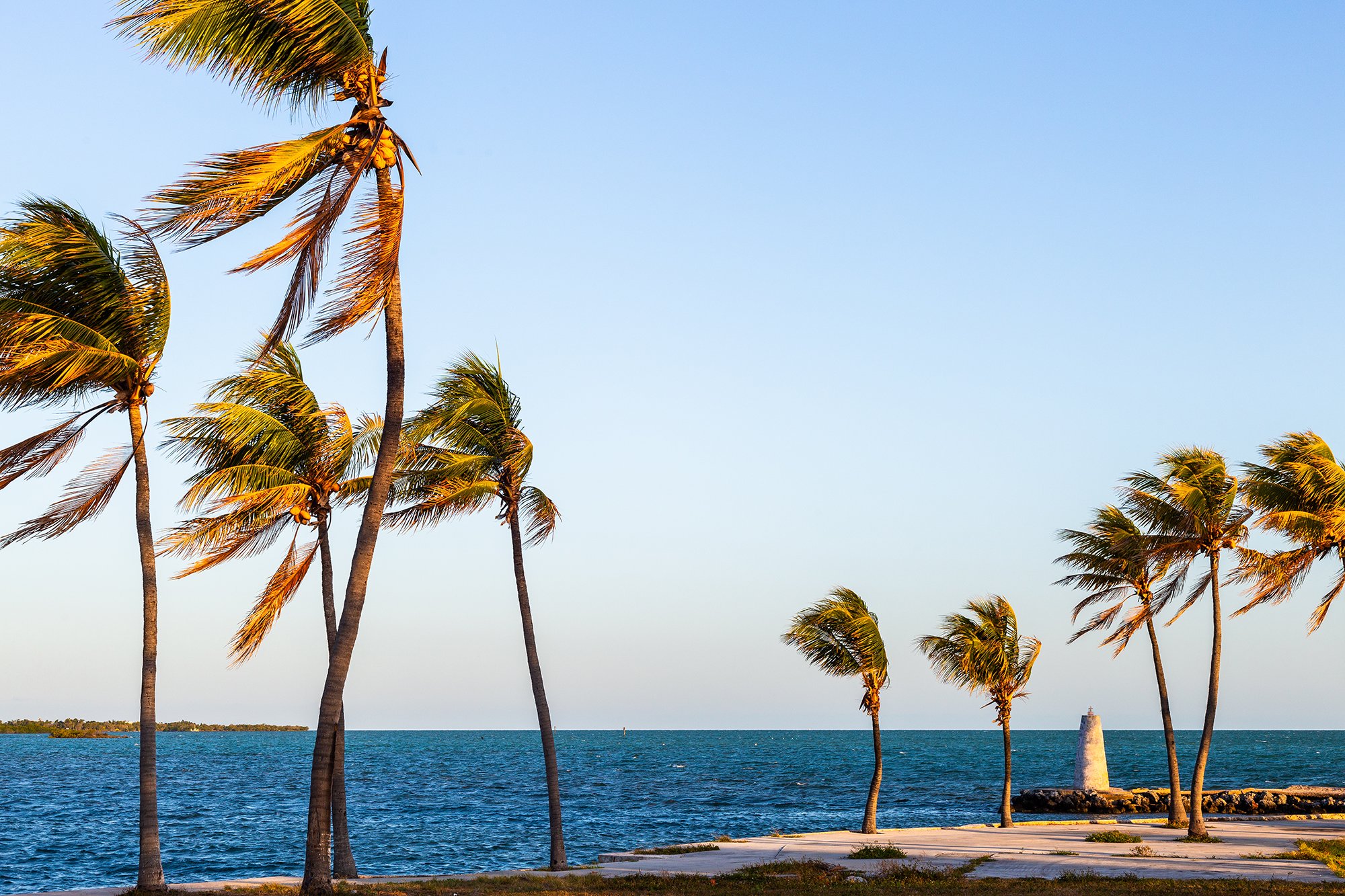
Palms and Beacon, Marathon Key
There is a common assumption that photographers are always searching for somewhere new.
New destinations. New landscapes. New experiences.
Photography often celebrates discovery. Social media rewards novelty. Travel guides encourage us to move quickly from one location to the next, collecting experiences along the way. The message is clear: the next photograph is somewhere else.
For many years, I believed that too.
But over time, I discovered something different.
Some of the most meaningful photographs I have made were not the result of finding a new place. They came from returning to familiar ones.
The more I revisited a landscape, the more I realized that it was never truly the same twice.
Light changed. The weather changed. Seasons changed. And perhaps most importantly, I changed.
The longer I spent with a place, the more it had to teach me.
“The photographs that matter most to me were not the result of a single moment. They were the result of returning.”
Looking Beyond the First Impression
The first time we visit a landscape, we often notice what is obvious.
The grand view.
The dramatic light.
The landmark everyone photographs.
There is nothing wrong with that. First impressions can be powerful.
But they are often incomplete.
When I return to a location for a second or third visit, I begin to notice details that were invisible to me before. The way shadows move across a landscape. The relationship between foreground and distance. The subtle changes in atmosphere that shape a scene's mood.
Familiarity creates space for observation.
Instead of searching for a photograph, I begin to understand a place.
White Sands and Distant Mountains
Discovering the Value of Returning
This lesson did not begin in the American Southwest or along the Mediterranean coast.
It began years earlier while I was living in Southern California.
Many of the landscapes I photographed there became places I returned to again and again. Some visits were separated by weeks, others by months, and a few by years.
The first visit was often about discovery.
The second visit was about understanding.
By the third or fourth visit, I found myself paying attention to entirely different things. The way morning fog transformed a coastline. How seasonal changes altered the character of a landscape. How shifting light revealed relationships between form, texture, and space that I had overlooked before.
Those experiences changed the way I approach fine art photography.
They taught me that landscapes reveal themselves gradually.
Not all at once.
The Florida Keys
The Florida Keys reinforced that lesson.
Places like Bahia Honda State Park, Seven Mile Bridge, and the coastlines surrounding Marathon became familiar over time. I visited them in different seasons, under different weather conditions, and at different times of day.
Some visits produced photographs.
Many did not.
But every visit taught me something.
I learned that changing tides can alter a composition. How cloud cover softened the horizon. How subtle differences in light could transform an ordinary scene into something memorable.
The photographs that eventually emerged were shaped by those observations.
They were not the result of a single moment.
They were the result of returning.
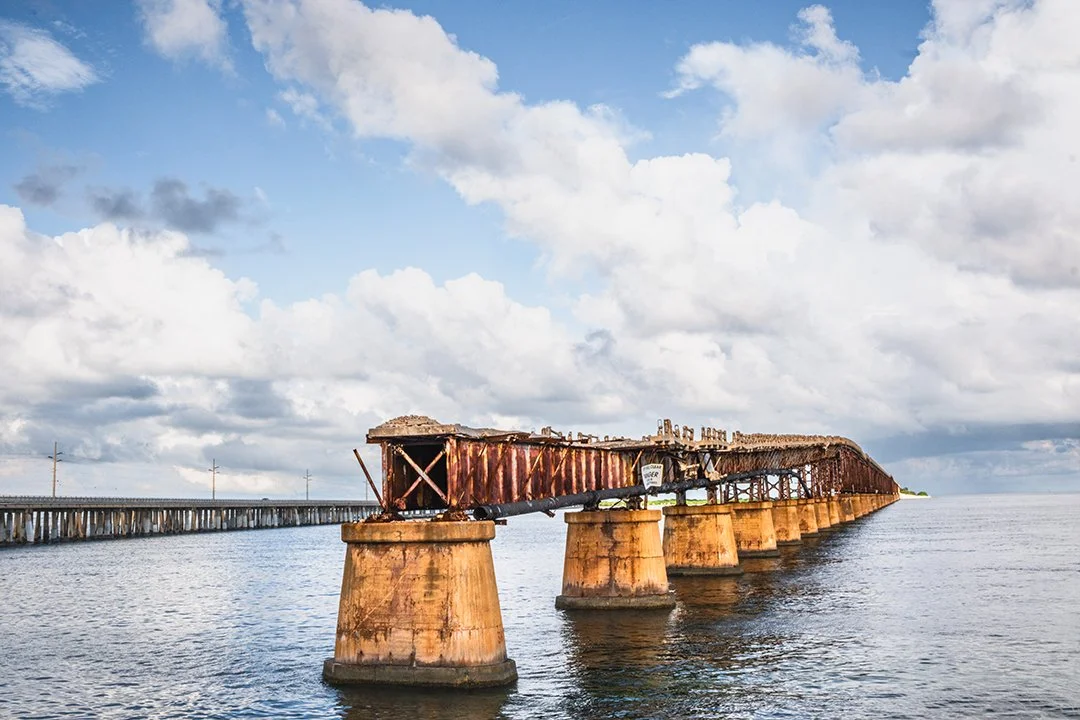
Old Bahia Honda Rail Bridge
Carrying The Lesson Forward
Ironically, some of the photographs that now appear in my collections were created during my first visits.
Many of the images in my Southwest and Quiet Horizons collections were photographed during a single journey.
Yet the lesson of returning remained.
Because even when I encounter a place for the first time, I approach it differently now.
I spend more time observing.
I move more slowly.
I resist the urge to immediately make photographs.
The years I spent returning to familiar landscapes taught me how to see new ones more carefully.
In that sense, every photograph carries the influence of those earlier experiences.
The location may be new, but the mindset is not.
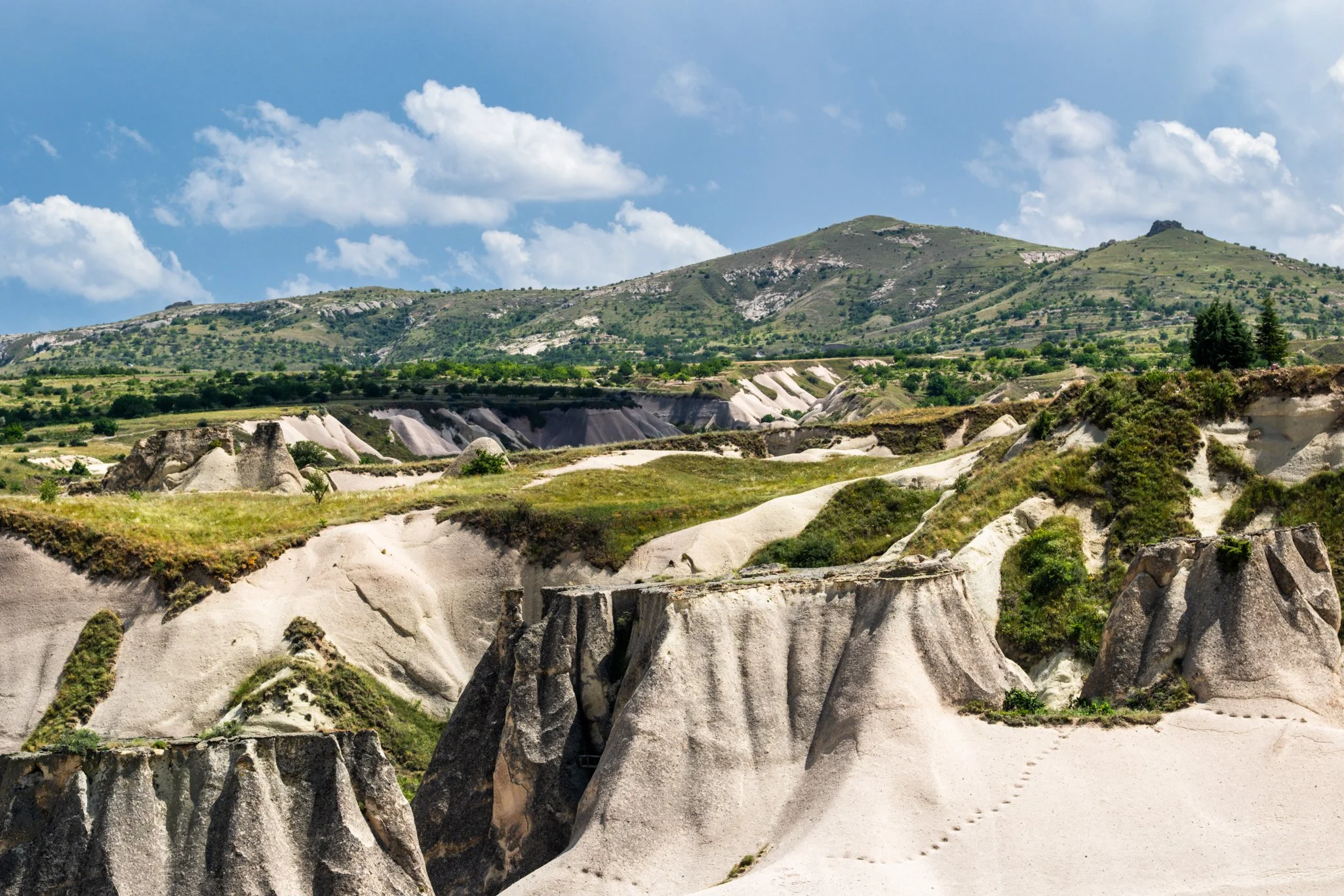
Göreme Valley Landscape
Learning to Slow Down
Returning to familiar places has taught me patience.
It has taught me that meaningful photographs are often discovered gradually rather than captured immediately.
Most importantly, it has taught me that landscapes reveal themselves over time.
The world encourages speed. Photography often encourages productivity.
But some places ask us to slow down.
To observe.
To wait.
To return.
The photographs that matter most to me are often the result of that process.
Not a search for something new, but a deeper understanding of something familiar.
Final Thoughts
When people ask about my favorite places to photograph, they are often surprised that my answer is not a specific destination.
It is the places that I have returned to most often.
Certain stretches of coastline.
Certain roads.
Certain overlooks.
Places that have become familiar enough for me to stop looking for photographs and start paying attention.
Because the longer I spend with a landscape, the more it has to teach me.
And sometimes the most rewarding photographs are not found by moving on to somewhere new, but by returning to a place we thought we already knew.
The Quiet Geometry of the American Southwest
A personal journey through the Mojave Desert, Grand Canyon, Chaco Canyon, and White Sands, exploring how light, form, and time shaped both a body of work and a transition into fine art photography.
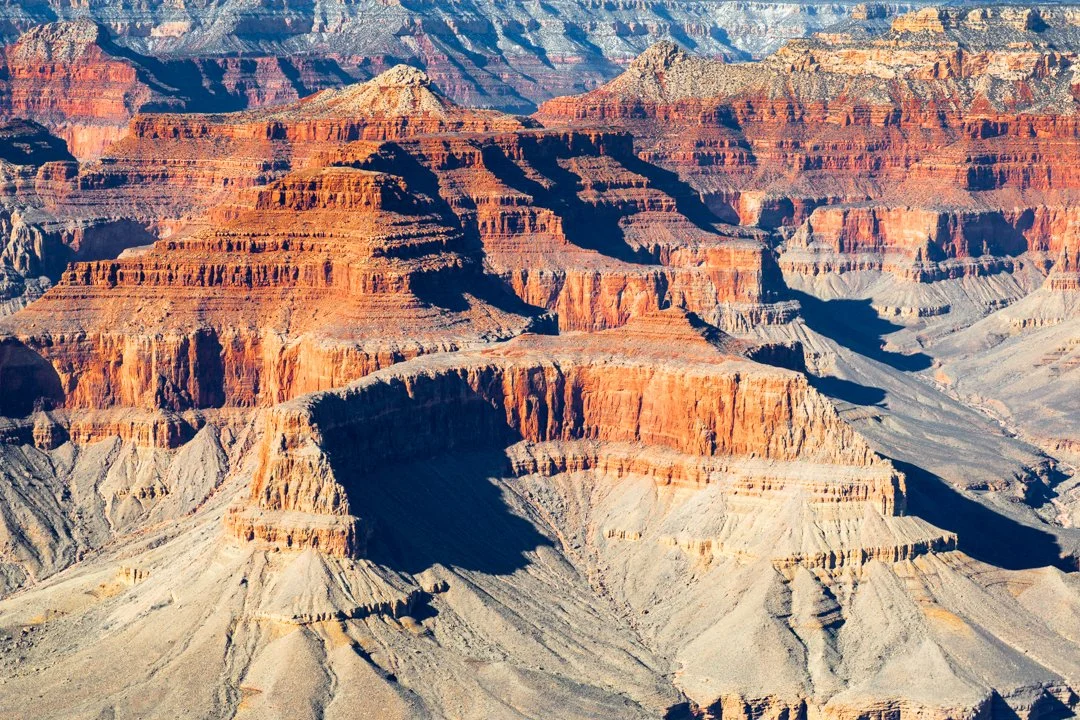
Layered Mesas of the Grand Canyon
Some photographs arrive with a clear purpose.
Others sit quietly in an archive for years before revealing why they were made.
The photographs that now form my Southwest Collection belong firmly in the second category.
Long before I launched this website or considered offering fine art prints, these images were created simply because I enjoyed being there. They were made during road trips, weekends away, and moments when I needed a break from the pace of photographing weddings.
Looking back, I realize they became something more.
They taught me how to slow down and observe.
They showed me how to value shape, texture, light, and time.
They ultimately guided my transition from wedding photography to becoming a fine art photographer.
“The Southwest taught me to slow down, observe, and appreciate the quiet relationship between light, form, and time.”
My First Experience Photographing the Southwest
For a period of time, I lived in Southern California and developed a deep appreciation for the landscapes of the American West.
Oddly enough, I didn’t begin photographing them seriously until I attended photography school.
While I was a student, I became friends with a photographer named Steve who often spent weekends exploring the Mojave Desert and the small desert communities surrounding it—places like Ridgecrest, Trona, Randsburg, and Inyokern.
One weekend, he invited me along.
What I expected to be a simple photography trip became one of the most memorable landscape experiences I’ve ever had.
The scenery changed constantly.
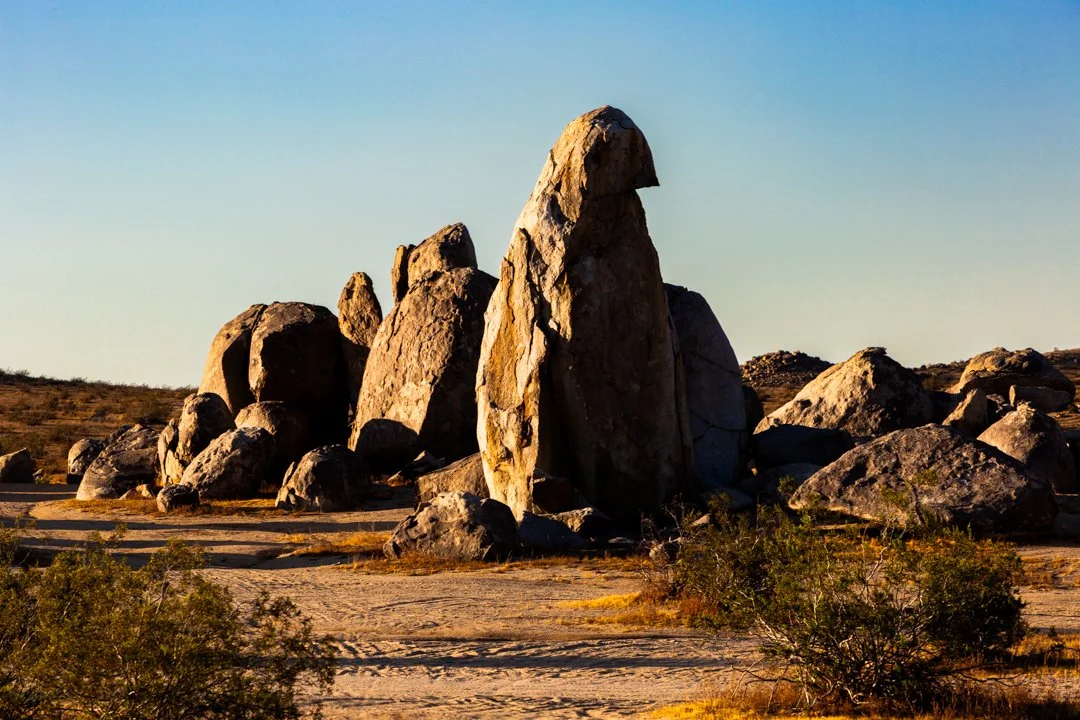
Vast open spaces shifted to dramatic rock formations. Harsh terrain softened into subtle textures and warm light. Everywhere, new shapes and patterns beckoned exploration.
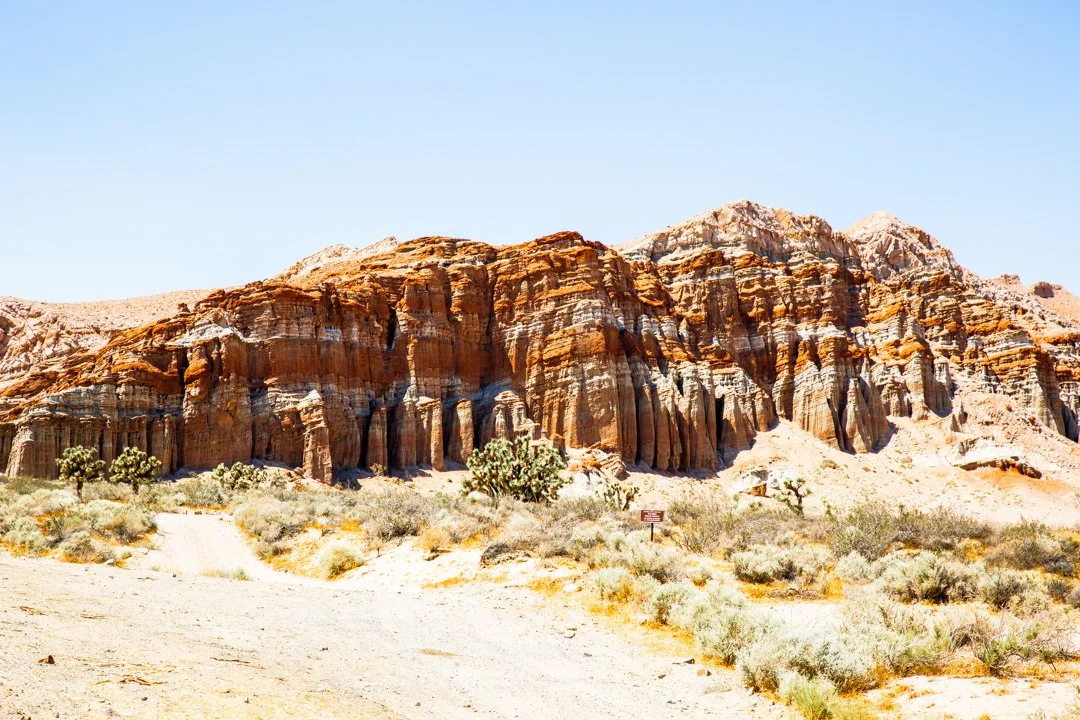
Two photographs from that trip—Red Rock Cliffs of the Southwest, depicting bold crimson formations under golden light, and Golden Light on Desert Boulders, which highlights warm hues and textured stone—remain among my favorites in the collection. Each image captures the distinctive light and forms I discovered during my time in the Mojave.
What captivated me most was not the ruggedness of the landscape, but its variety.
The desert felt alive with form and texture.
Even today, it remains one of the places I would most likely revisit and spend at least a month observing and photographing the landscape.
There is something about the Mojave that rewards patience.
The longer you look, the more it reveals.
Golden Light on Desert Boulders
A Winter Journey Across the Southwest
Years later, my wife Paula and I began a cross-country drive to Florida.
The journey unexpectedly became the foundation for much of this collection.
Our first major stop was Sedona, Arizona.
We arrived late at night and woke the next morning to discover our hotel balcony covered in snow.
As two people who were completely unprepared for winter weather, our first task wasn’t photography—it was finding warm clothes.
Sedona was beautiful beyond words.
I spent time photographing the area, creating many exciting images, though those photographs were later lost by accident.
At the time, I was disappointed.
Now I simply see it as another reason to return.
From Sedona, we continued north to the Grand Canyon.
Like many first-time visitors, I expected the scale to impress me.
What surprised me was how much I became fascinated by its structure.
The layers of stone seemed to stretch endlessly across the horizon, revealing patterns carved by millions of years of erosion.
The photograph Layered Mesas of the Grand Canyon, portraying the canyon’s horizontal bands of colorful stone, emerged from that experience. It encapsulates my fascination with the vast, patterned stone layers visible from the canyon rim.
Winter transformed the landscape.
A dusting of snow softened canyon colors and highlighted its geometry. The air was crisp, and the crowds were fewer than in warmer months.
Even now, I feel as though I only scratched the surface of what the Grand Canyon has to offer.
It’s a place I hope to revisit.
“What surprised me most about the Grand Canyon was not its size, but the quiet order hidden within it.”
The Silence of Chaco Canyon
From Arizona, we continued into northern New Mexico and eventually arrived at Chaco Canyon.
If you’ve never visited, I highly recommend it.
Chaco is not a place that can be appreciated in a few hours.
It demands time.
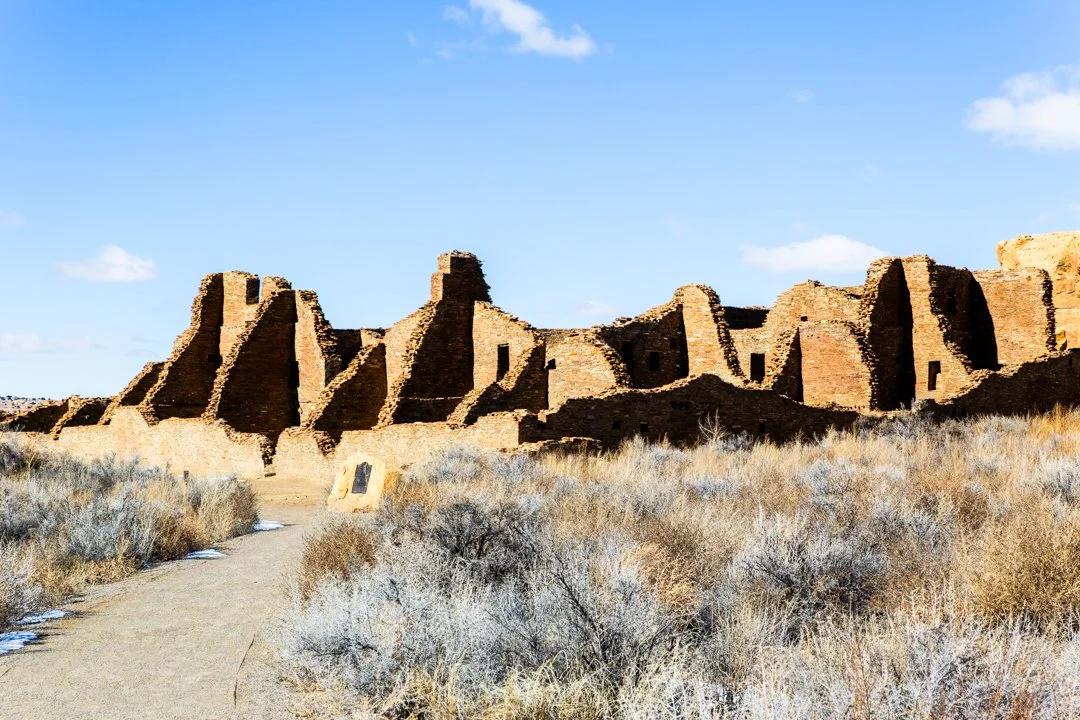
The landscape itself is remarkable, but what fascinated me most was the relationship between the ancient stone structures and the surrounding desert.
Natural and human-made forms seemed to exist in quiet conversation with one another.
Winter brought another unexpected gift.
There was virtually nobody there.
For long stretches, Paula and I felt as though we had the entire site to ourselves.
The temperature, however, was another story.
It was bitterly cold.
The tips of my fingers became numb, making it difficult to operate the camera. Every adjustment required effort, and every minute outside felt longer than it should.
Still, I kept photographing.
The silence, the history, and the solitude made the discomfort worthwhile. Those conditions became part of the experience.
Ancient Ruins of Chaco Canyon
White Sands: A Landscape Unlike Anywhere Else
From Arizona, we continued into northern New Mexico and eventually arrived at Chaco Canyon.
If you’ve never visited, I highly recommend it.
Chaco is not a place that can be appreciated in a few hours.
It demands time.
The landscape itself is remarkable, but what fascinated me most was the relationship between the ancient stone structures and the surrounding desert.
Natural and human-made forms seemed to exist in quiet conversation with one another.
Winter brought another unexpected gift.
There was virtually nobody there.
For long stretches, Paula and I felt as though we had the entire site to ourselves.
The temperature, however, was another story.
It was bitterly cold.
The tips of my fingers became numb, making it difficult to operate the camera. Every adjustment required effort, and every minute outside felt longer than it should.
Still, I kept photographing.
The silence, the history, and the solitude made the discomfort worthwhile. Those conditions became part of the experience.
White Sands and Distant Mountains
Yucca in White Sands
Looking Back
Red Rock Cliffs of the Southwest
When these photographs were created, I wasn’t building a collection.
I wasn’t planning a fine art photography business.
In many ways, I was simply giving myself permission to photograph for the joy of it.
After years of focusing primarily on weddings, these trips allowed me to slow down and reconnect with ideas I later explored in From Observation to Stillness.
The images were edited and archived, remaining largely unseen for years.
For years, they remained largely unseen.
When I began building this new chapter of my work as a fine art photographer, I returned to those archives with fresh eyes.
What I discovered was a body of work connected by the same themes that continue to guide my photography today:
Light.
Form.
Texture.
Stillness.
The photographs reminded me that the landscapes I return to most often are not necessarily the loudest or the most dramatic.
They are the photos that reward observation.
The ones that reveal themselves slowly.
The ones that invite us to pause.
Perhaps that is what I love most about the American Southwest.
Its beauty is not found in spectacle alone.
It is found in the quiet geometry of stone, sand, light, and time—enduring shapes that call us to stop, look deeply, and remember that beauty is often found when we are most willing to listen.
Explore the Southwest Collection
The photographs in this collection were created across the Mojave Desert, Grand Canyon, Chaco Canyon, and White Sands National Park. Together, they explore light, form, texture, and the quiet beauty of the American Southwest.
Tide & Light: Photographing the Florida Keys Through Light and Atmosphere
The first time I drove from Miami to Key West, I left before sunrise. As Highway One stretched south toward the Florida Keys, the pace of everything began to change. The traffic softened. The air felt warmer. The landscape opened into water, sky, and bridges suspended above the ocean. By the time I reached Key West, I had fallen in love with the stillness of the Keys.
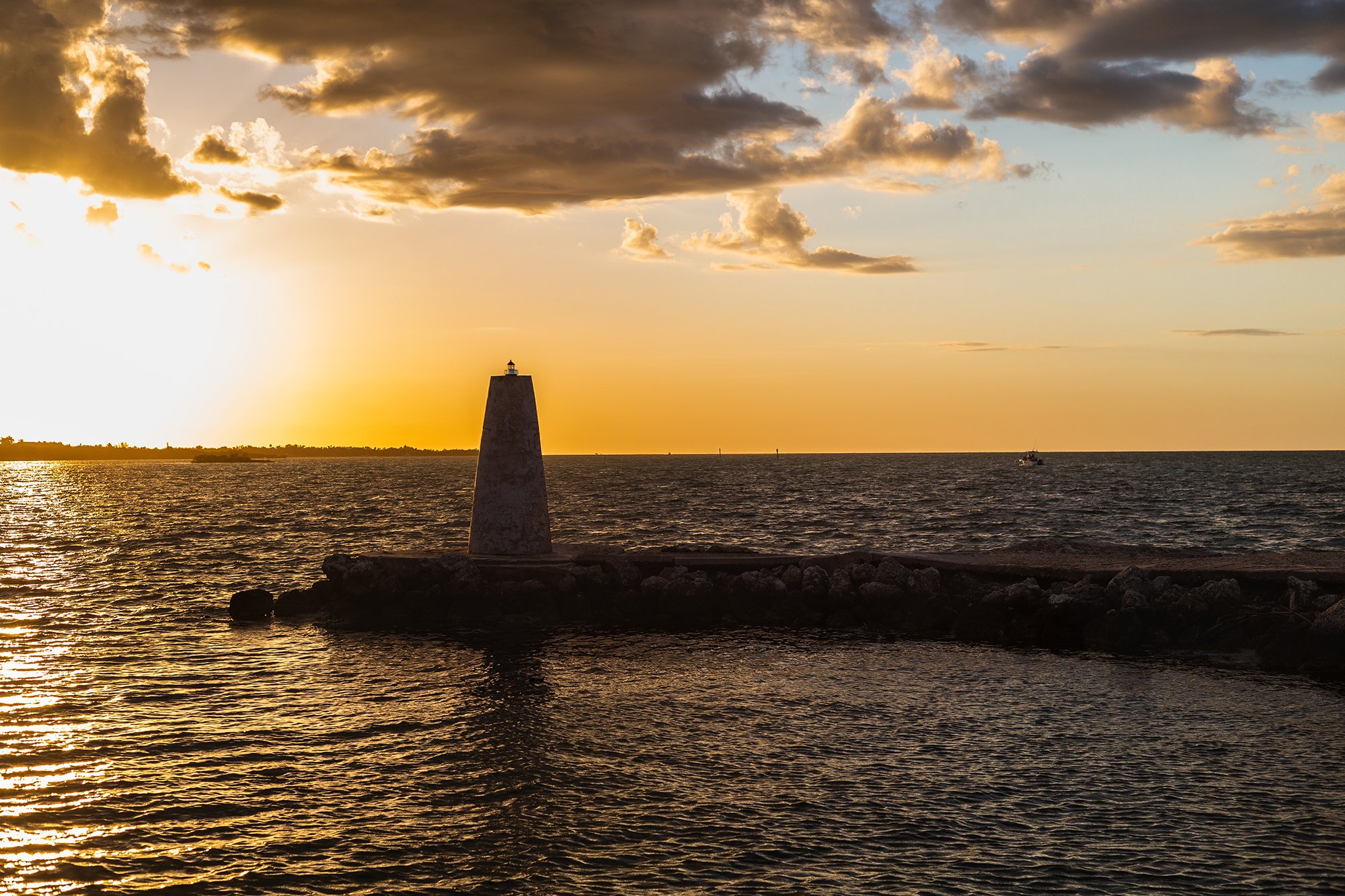
Harbor Beacon at Golden Hour - Marathon Key
The first time I drove from Miami to Key West, I left before sunrise.
As the city disappeared behind me and Highway One stretched south toward the Florida Keys, the pace of everything began to change. The traffic softened. The air felt warmer. The landscape opened into water, sky, and long bridges suspended above the ocean.
By the time I reached the last bridge before Key Largo, the sun had started to rise.
The light was warm and quiet, reflecting across the water in soft layers of gold and blue. It felt cinematic in a way that is hard to explain. It was not dramatic or overwhelming, but calm and immersive. The farther south I drove, the more the rhythm of the mainland seemed to disappear.
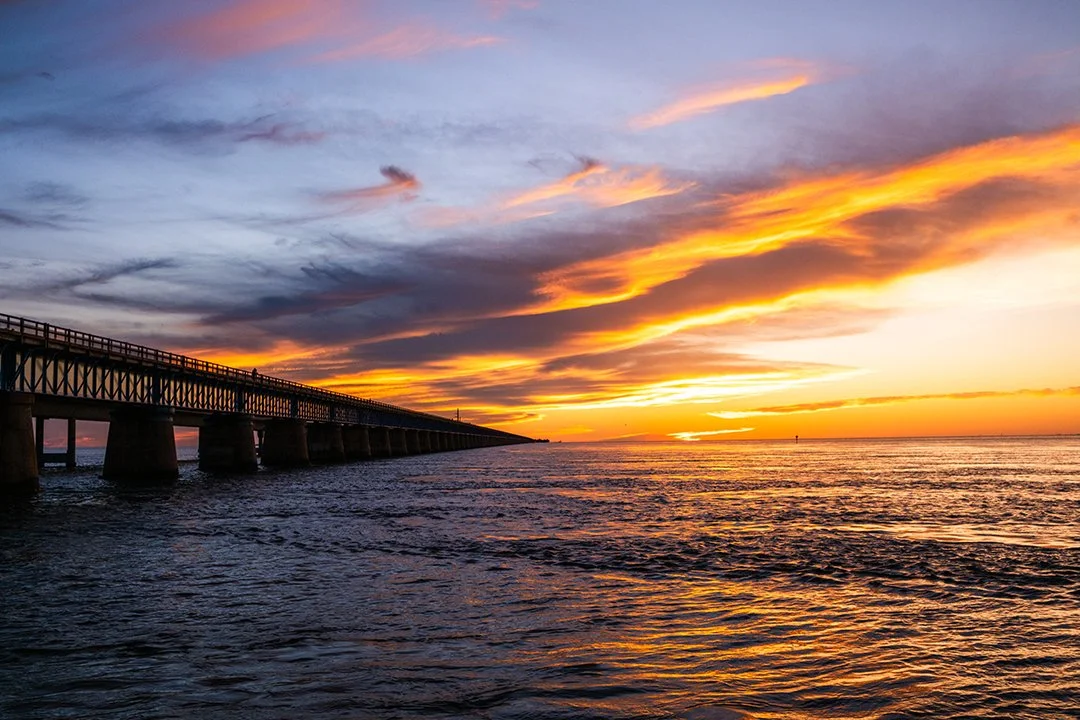
Later that same day, I stopped at the Seven Mile Bridge and stood watching the contrast between the old bridge and the new one stretching side by side across the Gulf. The scale of the structure against the water was astonishing. Waves moved gently against the massive concrete anchors while the afternoon light shifted continuously across the surface of the ocean.
I did not take many photographs during that first trip.
But I remember knowing, very clearly, that I had fallen in love with the atmosphere of the Keys.
Not just the scenery, but the feeling of the place itself.
The stillness.
The warmth.
The slowing down.
By the time I arrived in Key West, the entire island felt suspended in another era. The streets, the fading architecture, and the movement of people drifting from one corner to the next all carried a quiet retro character, as if time moved differently there. Even the air felt softer.
It was not a place that demanded attention.
It invited observation.
A Landscape Shaped by Light and Water
Over time, I began returning to the Keys often. Sometimes it was for a weekend staycation with my wife, and other times simply for a day away from Miami.
With each trip, I found myself paying closer attention to the way light moved through the landscape.
The Florida Keys are constantly changing. The sky shifts by the minute. Water reflects and absorbs color differently throughout the day. Clouds move quickly across open horizons, transforming an entire scene in moments.
Some of the photographs in the Tide & Light collection were created during these repeated visits. I was not chasing landmarks, but slowing down enough to notice the atmosphere.
Photographing the Old Bahia Honda Rail Bridge
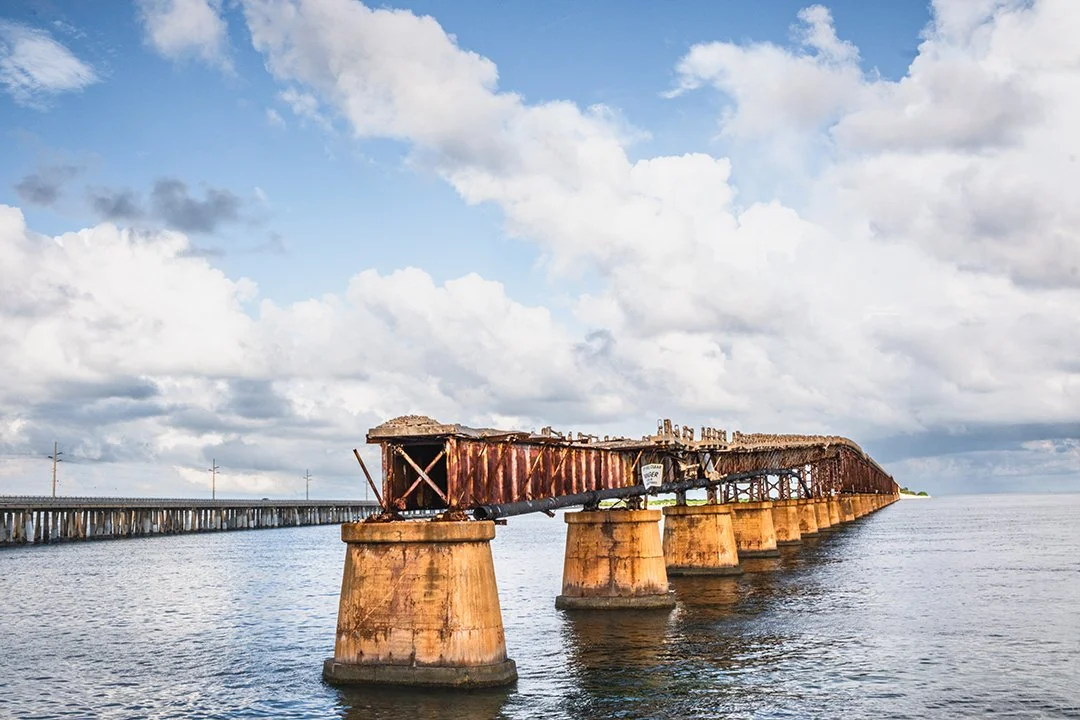
The old Bahia Honda Rail Bridge became one of those places I returned to again and again. Each time I photographed it, the structure felt different. Sometimes the bridge looked heavy and imposing against dark skies. Other times, it seemed quiet and almost fragile under soft coastal light.
The image included in this collection was photographed on a warm September afternoon while driving north along Highway One near the Seven Mile Bridge. Earlier in the day, the sky had been mostly clear. The sun sat high behind me, illuminating both the bridge and the Atlantic water with sharp clarity. But by the time I reached a position that allowed me to frame the image as I envisioned it, dense white clouds had begun to roll overhead, softening the entire scene.
That subtle shift completely changed the photograph.
The atmosphere became quieter.
The light became gentler.
The image became less about structure and more about presence.
Old Bahia Honda Rail Bridge
Weathered Trees, Shorebirds, and Coastal Stillness
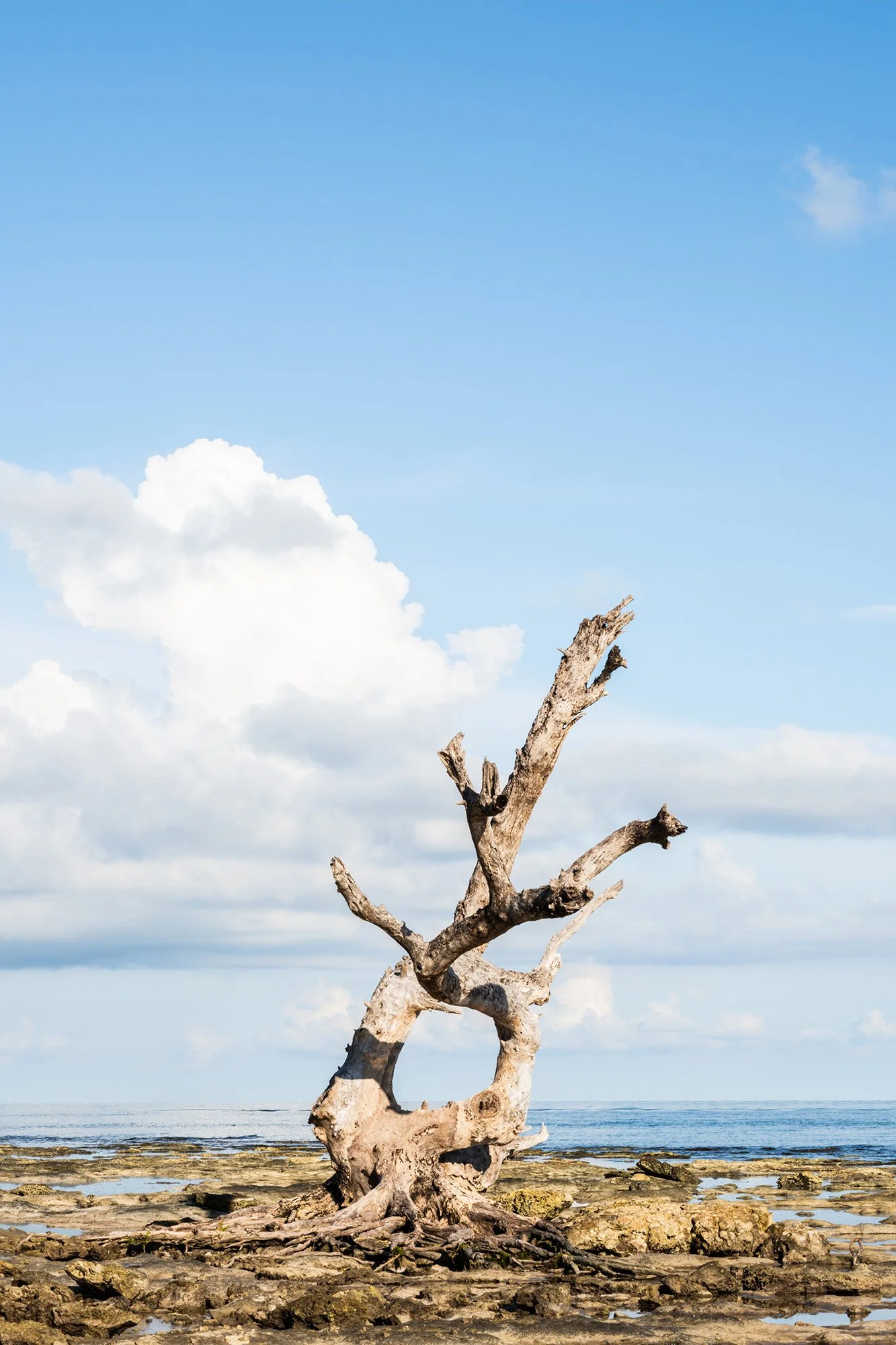
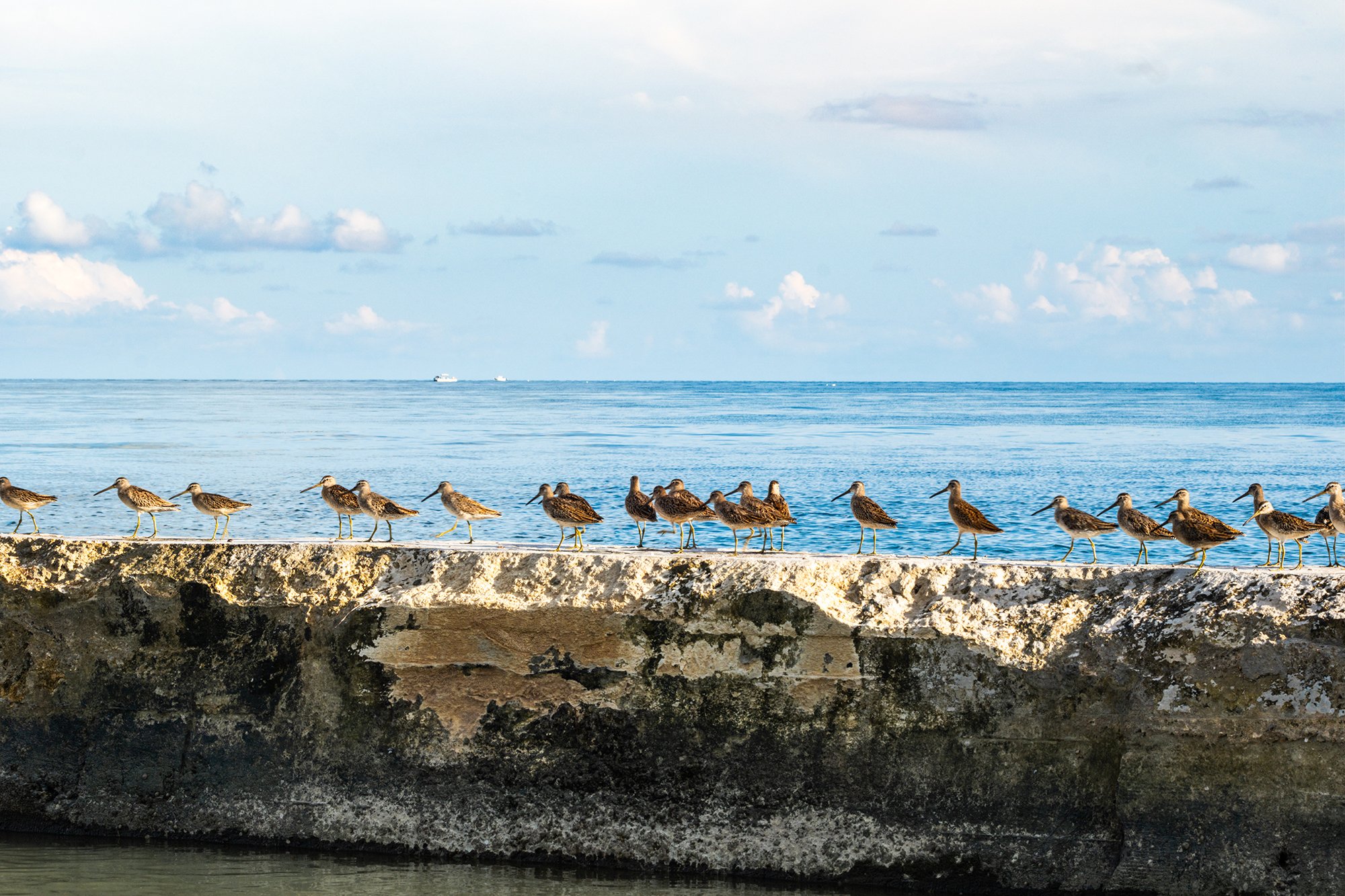
Around that same time, I photographed the marbled godwits gathered quietly along the shoreline, as well as Weathered Sentinel at Low Tide. The first time I encountered that tree years earlier, it still carried leaves. Now it stands stripped bare by salt, wind, and time.
I do not know how much longer either the tree or the old rail bridge will remain.
Part of what draws me back to the Keys is this sense of impermanence. The landscape is always shifting, eroding, and reshaping itself through light, weather, and water.
These moments of stillness are what continue to inspire my Florida Keys fine art photography and coastal wall art collections.
Weathered Tree Low Tide Florida Keys
Chasing the Last Light
Some of the most memorable moments from this collection happened in the final minutes before sunset.
Sunset at Seven Mile Bridge
The photograph, Seven Mile Bridge at Dusk, was created during the same trip as the Bahia Honda image. That evening, it felt as though everyone in the Keys had received the same message about the sunset that was about to unfold. Locals and tourists lined the bridge watching the sky change color over the Gulf.
To create a clean composition, I walked halfway down the steps toward the water and used the retaining wall to brace and stabilize my camera as I framed the scene.
The colors in the sky changed rapidly, but smoothly.
The water shifted from deep blue to violet, then orange and gold. The clouds stretched and dissolved as the sun moved lower against the horizon. It all happened slowly enough to feel calm, yet quickly enough that you could miss it entirely if you were not fully tuned in to the moment.
As I adjusted my exposure and reframed the scene, my heart pounded.
There is a strange emotional tension that can happen while photographing fleeting light. It feels as if the landscape and the photographer are moving together in real time, reacting to one another moment by moment. It becomes less about control and more about awareness.
Those are the moments I live for as an artist.
Photographing Sunset at Mallory Square
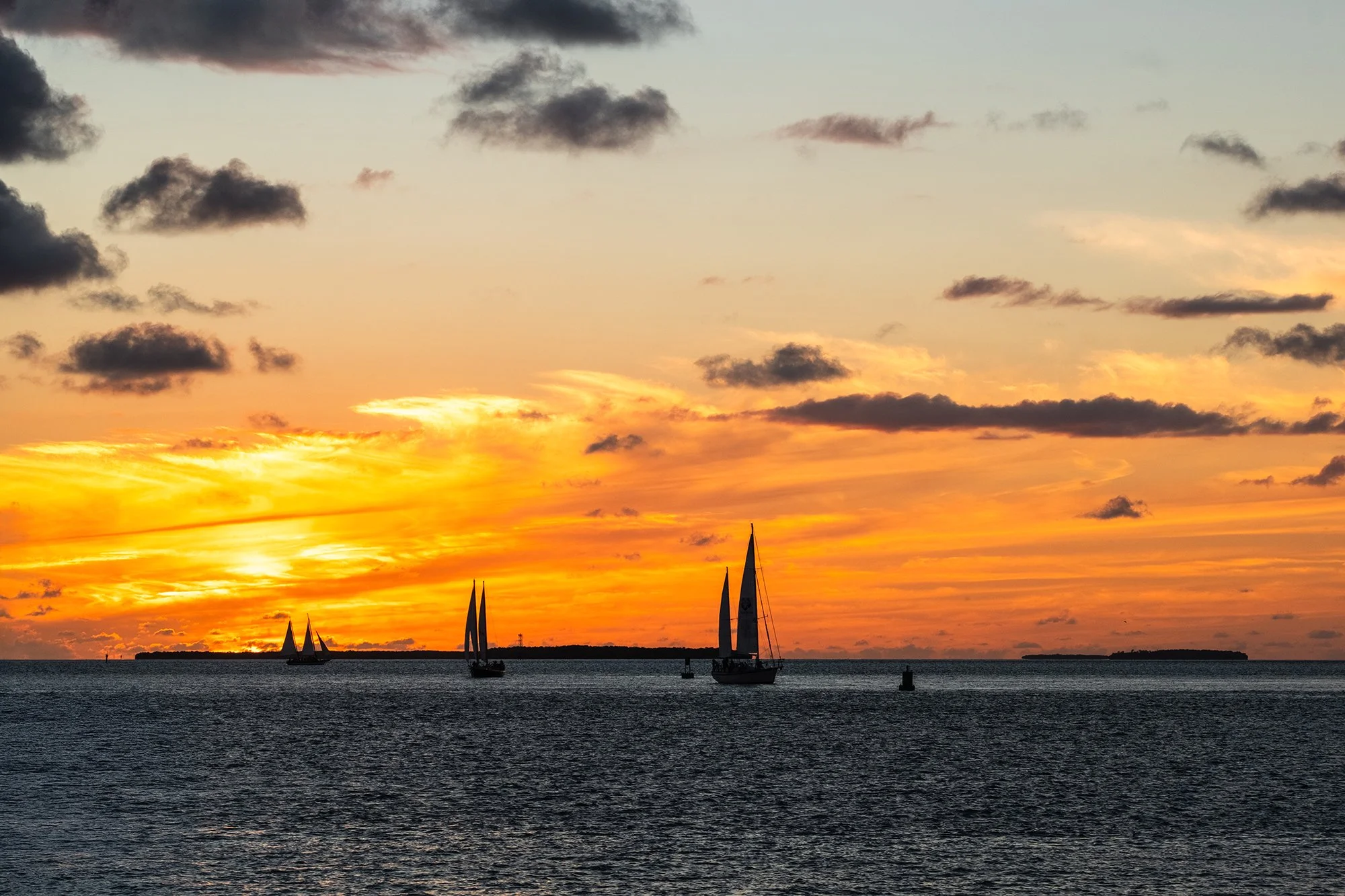
A similar feeling occurred while photographing Sailboats at Sunset near Mallory Square in Key West. Sunset gatherings there are crowded, energetic, and constantly moving. Finding a clean composition can be difficult.
As the sun dropped lower, I searched quickly for a small opening between people, positioned myself, adjusted the camera, and captured a handful of frames just before the last intense color faded from the sky into dusk.
Within minutes, the entire atmosphere softened.
The crowd dispersed.
The water darkened.
The sky quieted.
And once again, the Keys returned to stillness.
Returning to Stillness
Many of the photographs in Tide & Light were created years apart, but they remain connected through the same feeling that first drew me to the Keys during that early morning drive from Miami.
They are photographs shaped less by spectacle and more by observation.
By slowing down.
By returning.
By paying attention to subtle changes in light, weather, atmosphere, and time.
The Florida Keys taught me that some landscapes reveal themselves slowly. Not through dramatic moments alone, but through repetition, patience, and presence.
The more time I spend there, the more I realize these photographs are not simply about the ocean, the bridges, or the horizon lines.
They are about stillness.
And the quiet awareness required to truly see it.
Each photograph in the Tide & Light collection is available as a museum-quality fine art photography print designed for modern coastal interiors and collected living spaces.
You can explore the complete Tide & Light collection of Florida Keys fine art photography prints, learn more about the artist, or read the previous journal entry, From Observation to Stillness.
For behind-the-scenes moments and new work, follow along on Instagram.
From Observation to Stillness: The Work of Antonio Crutchley
Antonio Crutchley is a Miami-based fine art photographer creating museum-quality prints shaped by light, form, and quiet observation. His work explores landscapes, architecture, and natural environments through a refined, minimalist lens—images designed not only to be seen, but to be lived with.
Old Bahia Honda Rail Bridge
Antonio Crutchley is a Miami-based fine art photographer creating museum-quality photographic prints shaped by light, form, and quiet observation. His work explores landscapes, architecture, and natural environments through a refined, minimalist lens—images designed not only to be seen, but to be lived with.
Each photograph is created with intention, considering how it will exist within a space—how light, tone, and composition contribute to a sense of balance, stillness, and presence. The result is a body of work that feels both grounded and atmospheric, offering a quiet visual experience for modern interiors.
Early Influence
Originally from the mountains of Saint Andrew, Jamaica, Antonio’s connection to art began early. As a child, he was recognized for his creative ability, though that path gradually gave way to more practical pursuits.
Photography re-emerged years later—not as a passing interest, but as something more enduring. What began as exploration became discipline. Over time, it developed into a way of seeing—an attentiveness to light, environment, and composition that would come to define his work.
From Documentary to Fine Art
Ancient Ruins of Chaco Canyon
Before focusing on fine art photography, Antonio spent over a decade as a professional wedding photographer, documenting human connection with a calm, observational approach.
Working across the United States and international destinations, he developed a sensitivity to fleeting moments—learning to anticipate light, compose intuitively, and create images with emotional depth.
That experience continues to shape his work today.
While the subject has shifted from people to place, the intention remains the same:
to create images that resonate beyond the moment they were captured.
Photography, for him, has always been about more than documentation—it is about presence.
A Study in Light, Form, and Atmosphere
White Sands and Distant Mountains
At the core of Antonio’s work is a restrained, intentional approach to composition.
Natural light is treated as a primary subject—defining mood, texture, and depth. Elements within the frame are simplified, allowing form and atmosphere to emerge without distraction. Each image is composed with a sense of stillness, inviting pause rather than demanding attention.
His work draws from environments that offer both contrast and quiet:
the shifting tones of the Florida Keys,
the sculptural landscapes of the American Southwest,
and the layered architecture and coastal light of the Mediterranean.
Across these locations, a consistent visual language takes shape—one defined by balance, subtlety, and a considered use of color.
Every photograph is created with its final form in mind—not just as an image, but as a physical print. Scale, material, and presentation are integral to the process, ensuring that each piece integrates seamlessly into the spaces it inhabits.
The Work Today
Antonio’s current focus is on developing a curated collection of fine art photography prints for collectors, designers, and individuals seeking timeless, elevated imagery.
Each print is produced with museum-quality materials, emphasizing craftsmanship, longevity, and visual clarity. The work is intended to live quietly within a space—adding depth without overwhelming it, and offering a lasting sense of calm and presence.
Göreme Valley Landscape
Artist Statement
“My work is an exploration of light, form, and atmosphere—an attempt to translate the quiet beauty of a place into something lasting.
I’m less interested in documenting what a scene looks like and more interested in how it feels to stand within it.
Each image is created with intention—to bring a sense of calm, balance, and presence into the spaces where it lives.”
A New Chapter — Introducing Fine Art Photography Prints
Over several years, I’ve been building a body of work shaped by light, atmosphere, and place. What began alongside my work in wedding photography has evolved into something more personal — a quieter, more intentional way of seeing.
Seven Mile Bridge at Dusk
Over several years, I’ve been building a body of work shaped by light, atmosphere, and place. What began alongside my work in wedding photography has evolved into something more personal — a quieter, more intentional way of seeing.
From Weddings to Fine Art
For many years, my work was centered around documenting moments. That chapter remains meaningful to me. It shaped the way I observe, anticipate, and compose. But over time, my focus shifted.
I found myself drawn to stillness — to landscapes, to architecture, to environments shaped not by a moment, but by time itself. What began as a personal practice slowly became a defined body of work.
The Work
White Sands and Distant Mountains
This collection is guided by a simple idea: how an image lives within a space. Each photograph is composed with restraint, emphasizing light, form, and atmosphere. The intention is not to dominate a room, but to settle into it — to create a sense of balance, quiet, and presence.
Designed for Thoughtful Spaces
All works are offered as museum-quality giclée prints on archival paper. They are released as prints only — allowing each piece to be framed in a way that reflects the space it enters. The focus remains on the image and its relationship to its environment.
The First Collections
The initial release introduces three collections, each defined by a distinct sense of place.
Tide & Light reflects the shifting tones and textures of the Florida Keys.
Southwest explores sculpted desert forms and the interplay of light across stone.
Quiet Horizons moves toward minimal, atmospheric scenes captured across parts of Europe.
Voidokilia Reflection
Launching April 15
The full collection will be released on April 15.
Early access subscribers will receive a first look ahead of the public launch.
Thank you for being here at the beginning of this new chapter.
— Antonio