
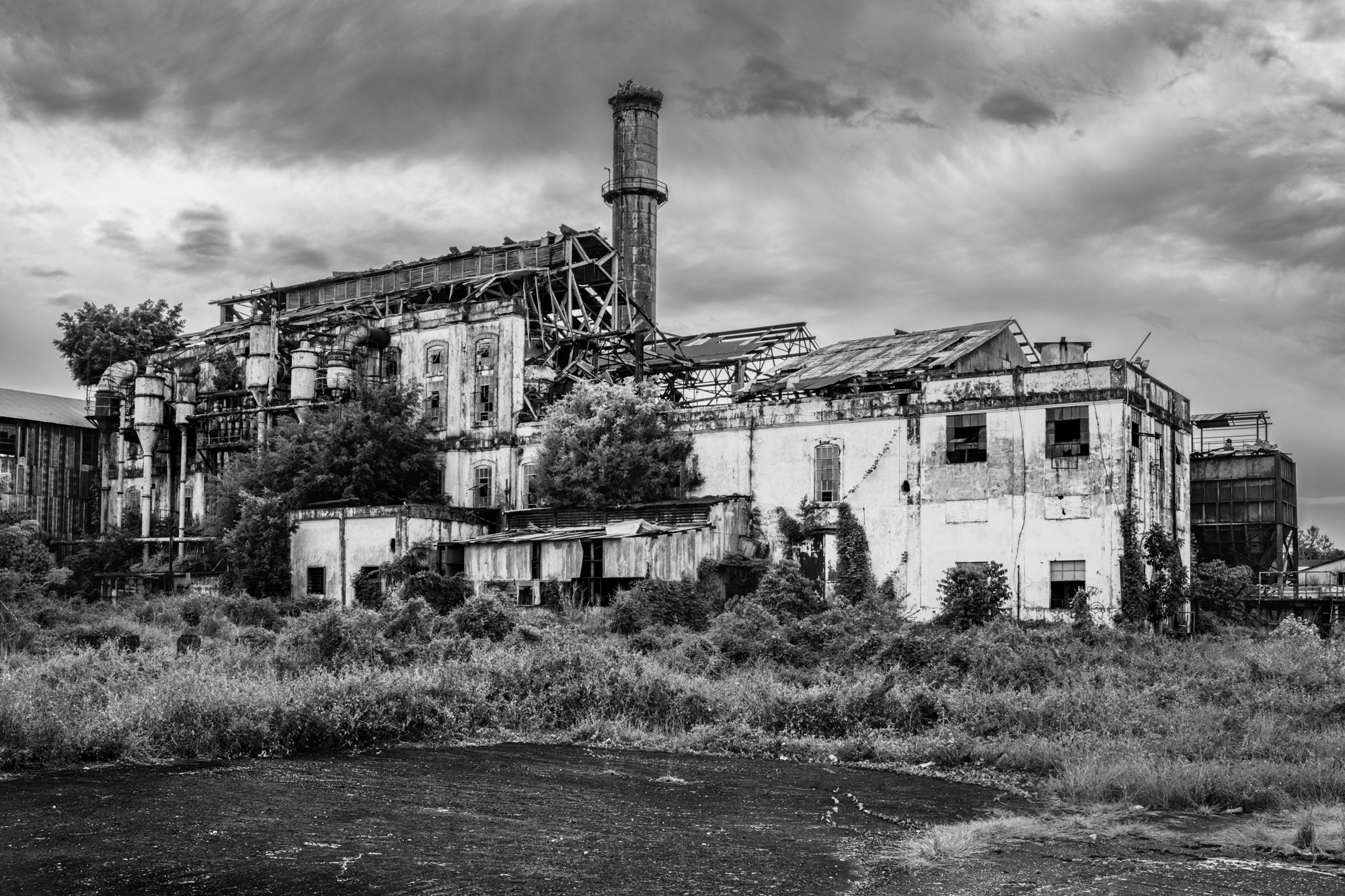
What Remains in Silence: Photographing Puerto Rico’s Forgotten Places
Six weeks of slow travel through Puerto Rico inspired four distinct collections. What Remains in Silence explores abandoned architecture, historic ruins, and the quiet traces time and nature leave behind.
Earlier this year, 2026, my wife and I spent six weeks in Puerto Rico. The trip was partly a test run for the longer periods of slow travel we are planning through Central and South America. It gave us a chance to experience what it would feel like to stay in one place without the usual pressure to see everything before it was time to return home.
What I discovered was how peaceful slow travel can be.
We spent most of our time in northwestern Puerto Rico, including Quebradillas, Aguadilla, Aguada, and Añasco, with another portion of the trip on Vieques. Moving at a slower pace gave me time to decide what I wanted to photograph—and, just as importantly, when I wanted to photograph it.
Instead of collecting as many locations as possible, I could return, wait for the right conditions, and pay closer attention to the places that kept drawing me back.
Over those six weeks, I created a broad and varied body of work that eventually developed into four distinct collections. Each reflects a different aspect of my experience in Puerto Rico. What Remains in Silence is one of those collections—a black-and-white study of abandoned architecture, historic ruins, and the traces that time and nature have left behind.
Discovering What Time Has Left Behind
Although Vieques was the most visited of the places where we stayed, much of the island felt removed from the pace of modern tourism. Away from the busier areas, narrow roads curved through dense vegetation. Some became dirt roads marked by holes large enough to make every drive an exercise in patience.
Across the island, the landscape quietly reclaimed what had been abandoned. Vegetation covered old military bunkers, unused structures, and fragments of a former era. Buildings that once served a clear purpose now stood partially concealed by trees and vines.
Among them was the Central Playa Grande sugar mill.
Finding the ruins took three attempts. My wife and I had driven past the site several times without realizing it. No signs directed us to the entrance, and our navigation apps stopped working reliably in that part of the island.
Just as I was ready to give up, I searched for a location pin and discovered that we had been passing the ruins all along. The remains were simply hidden behind the surrounding vegetation.
We found the site on an overcast afternoon. The light was flat, and it was already too late to explore the complex properly, so we decided to return the following morning.
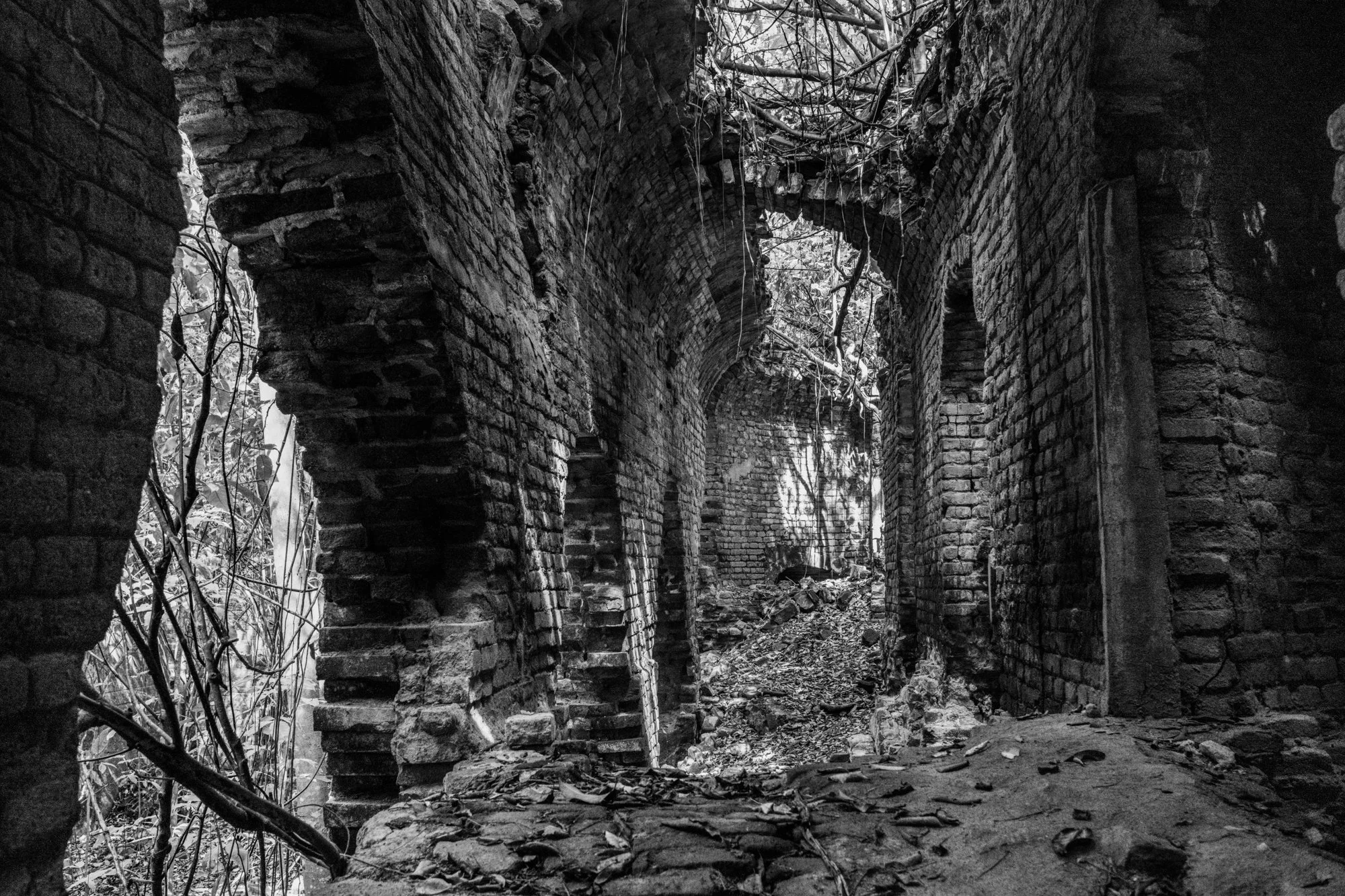
My wife waited in the car while I followed a narrow footpath into the trees. What gradually emerged through the foliage were pieces of a once-massive structure: brick passageways, arched openings, fractured walls, and rooms without roofs. I moved slowly through the ruins, photographing each discovery as the path carried me deeper into the site.
There was a sense that the structure was disappearing even as I stood within it. Only remnants of much of the sugar mill remain, and it may not be long before the landscape reclaims them completely.
Seeing the Photograph Before Making It
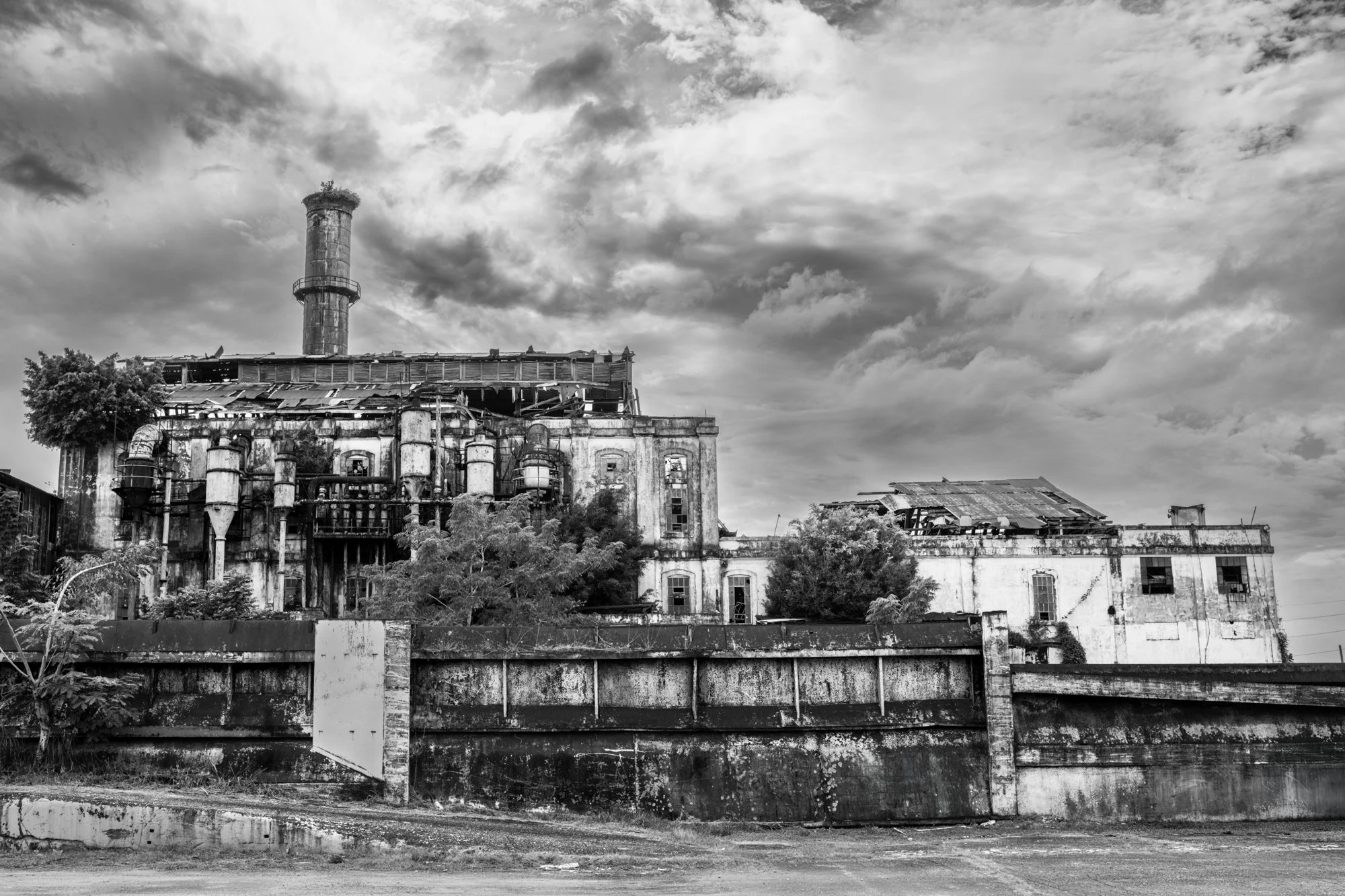
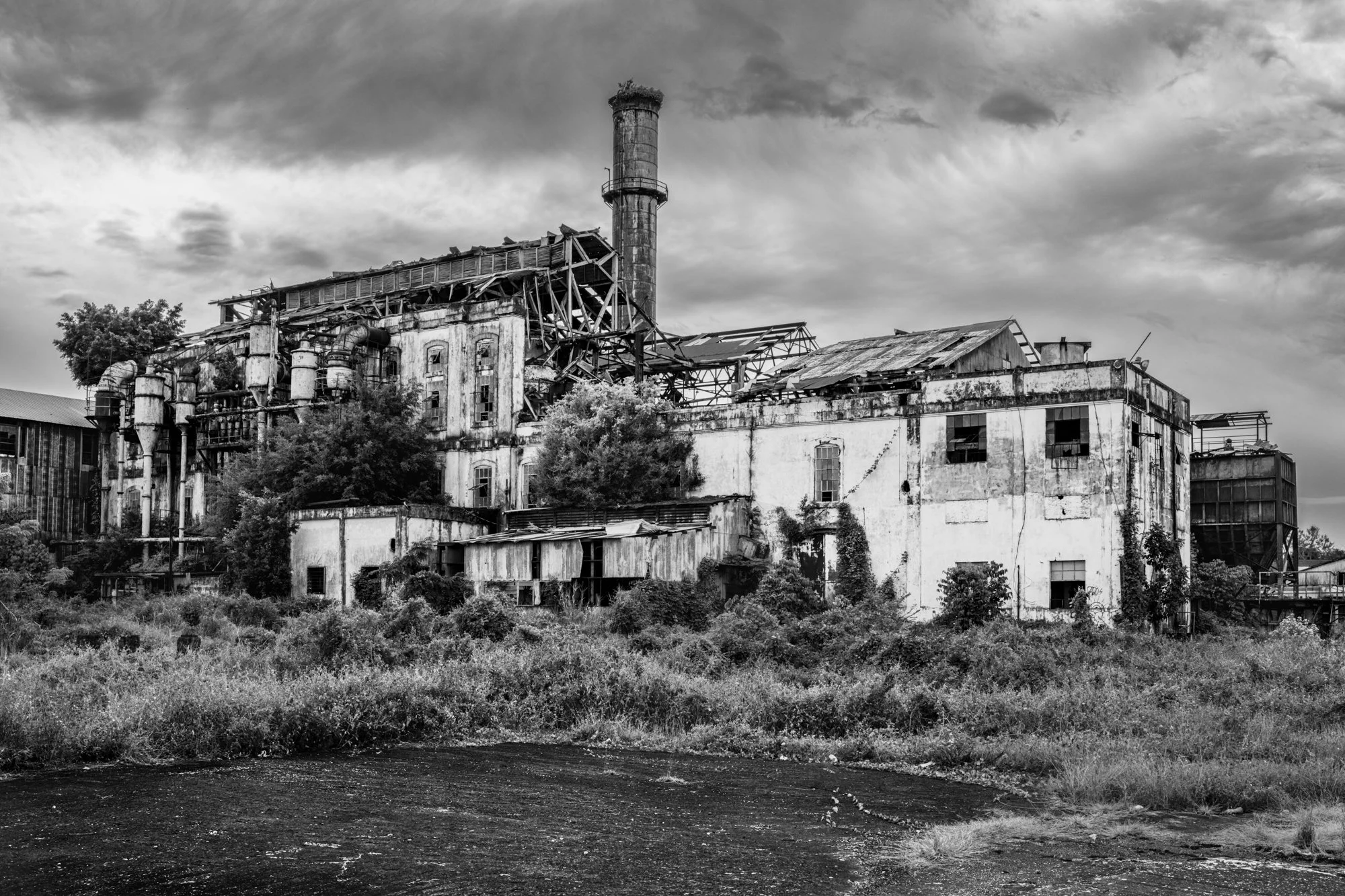
The Central Coloso ruins in Aguada offered a very different experience from the hidden remains on Vieques; the old sugar mill was clearly visible from the road.
The first time I passed it, I knew I wanted to photograph it. I could already see the finished image in black and white: the weathered industrial structure, the tall tower, and the contrast between the building and the sky.
I hadn’t anticipated the dramatic overcast clouds. They gave the ruins a greater sense of presence and brought an atmosphere to the photographs that a clear sky could not have provided. The structure’s darkness and the movement in the clouds seemed to speak to one another.
That light helped shape the collection’s visual language.
Light Inside the Guajataca Tunnel
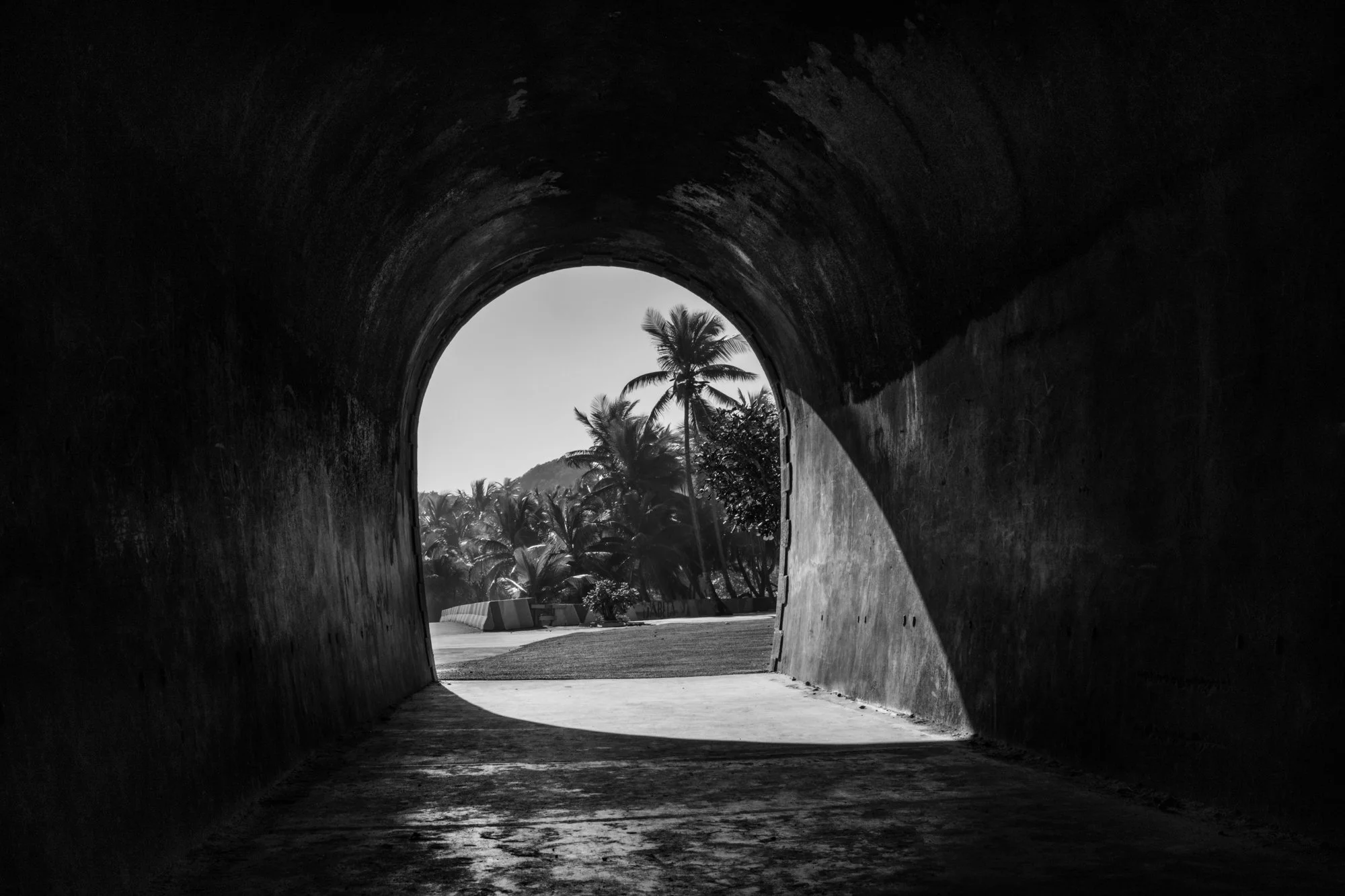
The Guajataca Railroad Tunnel, near the border of Quebradillas and Isabela, is another surviving piece of Puerto Rico’s history. Because it sits beside a public beach, it can become busy with local foot traffic throughout the day.
I arrived early in the morning, before most beachgoers had begun to gather.
Inside the tunnel, the experience changed completely. The bright landscape beyond the entrance was reduced to a carefully framed opening surrounded by darkness. Light curved across the floor, revealing the passage’s shape while leaving much of its surface in shadow.
I was in heaven during that shoot—moving through the tunnel, watching the light and exploring the relationship between darkness, architecture, and the tropical landscape waiting beyond the opening.
Why What Remains in Silence
What Remains in Silence represents one part of the larger photographic body of work I created during those six weeks in Puerto Rico. Of the four collections that emerged, this is the one most concerned with history, abandonment, and the gradual transformation of structures left exposed to time and nature.
As I worked through these photographs, one thought kept returning: some of these places may not remain much longer.
The buildings are deteriorating. Vegetation is advancing. Walls, arches, and industrial structures that have survived for decades are slowly becoming part of the surrounding landscape.
This collection is not intended as a complete historical record of these places. It is a personal response to standing before them—to the stillness I encountered, the marks left by time, and the way light briefly revealed what might otherwise have gone unnoticed.
Presented in black and white, the photographs move beyond the landscape’s immediate colors to focus on texture, form, shadow, and atmosphere. Together, they reflect on what survives, what disappears, and what a photograph can preserve.