
The Quiet Geometry of the American Southwest
A personal journey through the Mojave Desert, Grand Canyon, Chaco Canyon, and White Sands, exploring how light, form, and time shaped both a body of work and a transition into fine art photography.
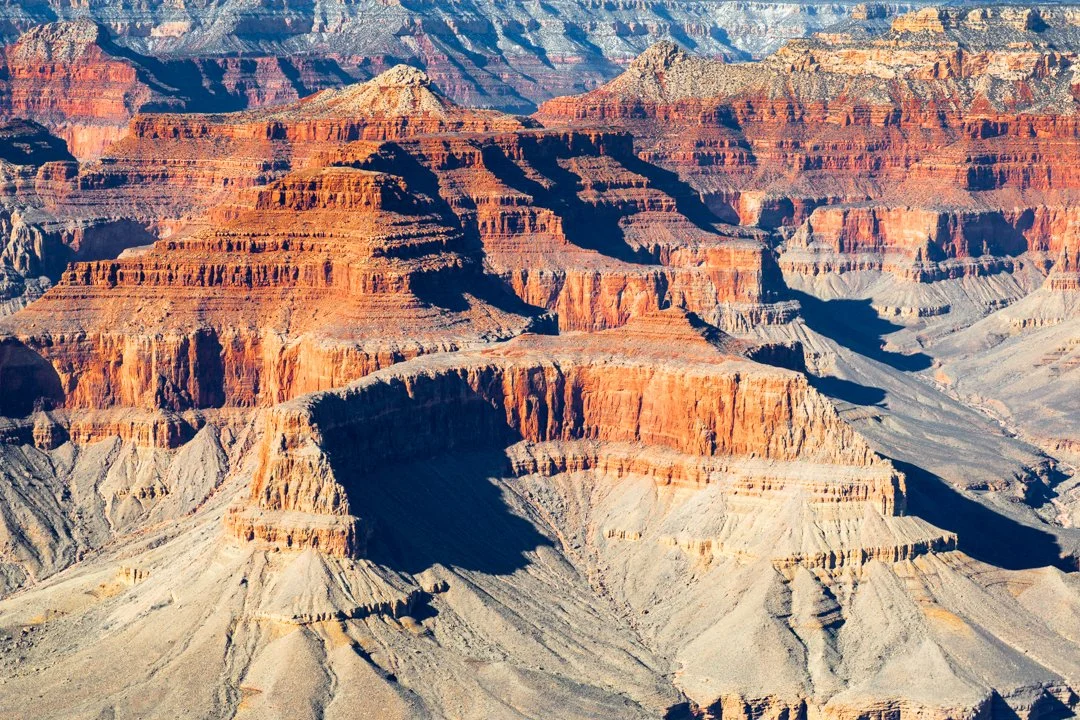
Layered Mesas of the Grand Canyon
Some photographs arrive with a clear purpose.
Others sit quietly in an archive for years before revealing why they were made.
The photographs that now form my Southwest Collection belong firmly in the second category.
Long before I launched this website or considered offering fine art prints, these images were created simply because I enjoyed being there. They were made during road trips, weekends away, and moments when I needed a break from the pace of photographing weddings.
Looking back, I realize they became something more.
They taught me how to slow down and observe.
They showed me how to value shape, texture, light, and time.
They ultimately guided my transition from wedding photography to becoming a fine art photographer.
“The Southwest taught me to slow down, observe, and appreciate the quiet relationship between light, form, and time.”
My First Experience Photographing the Southwest
For a period of time, I lived in Southern California and developed a deep appreciation for the landscapes of the American West.
Oddly enough, I didn’t begin photographing them seriously until I attended photography school.
While I was a student, I became friends with a photographer named Steve who often spent weekends exploring the Mojave Desert and the small desert communities surrounding it—places like Ridgecrest, Trona, Randsburg, and Inyokern.
One weekend, he invited me along.
What I expected to be a simple photography trip became one of the most memorable landscape experiences I’ve ever had.
The scenery changed constantly.
Vast open spaces shifted to dramatic rock formations. Harsh terrain softened into subtle textures and warm light. Everywhere, new shapes and patterns beckoned exploration.
Two photographs from that trip—Red Rock Cliffs of the Southwest, depicting bold crimson formations under golden light, and Golden Light on Desert Boulders, which highlights warm hues and textured stone—remain among my favorites in the collection. Each image captures the distinctive light and forms I discovered during my time in the Mojave.
What captivated me most was not the ruggedness of the landscape, but its variety.
The desert felt alive with form and texture.
Even today, it remains one of the places I would most likely revisit and spend at least a month observing and photographing the landscape.
There is something about the Mojave that rewards patience.
The longer you look, the more it reveals.
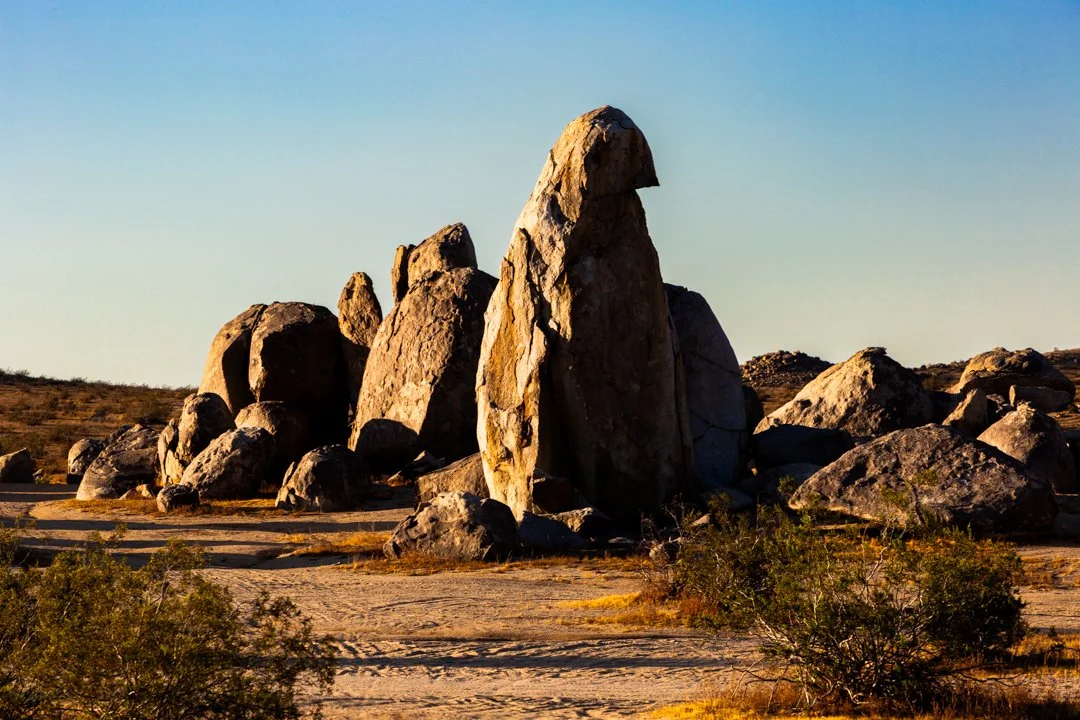
Golden Light on Desert Boulders
A Winter Journey Across the Southwest
Years later, my wife Paula and I began a cross-country drive to Florida.
The journey unexpectedly became the foundation for much of this collection.
Our first major stop was Sedona, Arizona.
We arrived late at night and woke the next morning to discover our hotel balcony covered in snow.
As two people who were completely unprepared for winter weather, our first task wasn’t photography—it was finding warm clothes.
Sedona was beautiful beyond words.
I spent time photographing the area, creating many exciting images, though those photographs were later lost by accident.
At the time, I was disappointed.
Now I simply see it as another reason to return.
From Sedona, we continued north to the Grand Canyon.
Like many first-time visitors, I expected the scale to impress me.
What surprised me was how much I became fascinated by its structure.
The layers of stone seemed to stretch endlessly across the horizon, revealing patterns carved by millions of years of erosion.
The photograph Layered Mesas of the Grand Canyon, portraying the canyon’s horizontal bands of colorful stone, emerged from that experience. It encapsulates my fascination with the vast, patterned stone layers visible from the canyon rim.
Winter transformed the landscape.
A dusting of snow softened canyon colors and highlighted its geometry. The air was crisp, and the crowds were fewer than in warmer months.
Even now, I feel as though I only scratched the surface of what the Grand Canyon has to offer.
It’s a place I hope to revisit.
“What surprised me most about the Grand Canyon was not its size, but the quiet order hidden within it.”
The Silence of Chaco Canyon
From Arizona, we continued into northern New Mexico and eventually arrived at Chaco Canyon.
If you’ve never visited, I highly recommend it.
Chaco is not a place that can be appreciated in a few hours.
It demands time.
The landscape itself is remarkable, but what fascinated me most was the relationship between the ancient stone structures and the surrounding desert.
Natural and human-made forms seemed to exist in quiet conversation with one another.
Winter brought another unexpected gift.
There was virtually nobody there.
For long stretches, Paula and I felt as though we had the entire site to ourselves.
The temperature, however, was another story.
It was bitterly cold.
The tips of my fingers became numb, making it difficult to operate the camera. Every adjustment required effort, and every minute outside felt longer than it should.
Still, I kept photographing.
The silence, the history, and the solitude made the discomfort worthwhile. Those conditions became part of the experience.
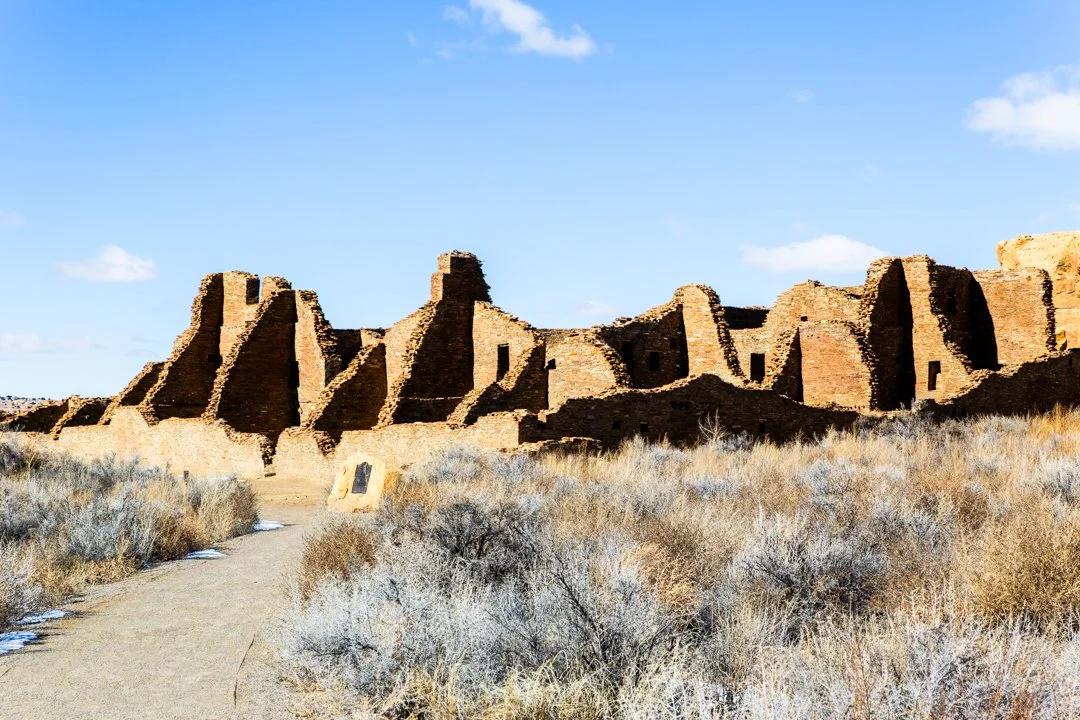
Ancient Ruins of Chaco Canyon
White Sands: A Landscape Unlike Anywhere Else
My final stop for this collection was White Sands National Park in southern New Mexico.
Few places have surprised me as much as White Sands.
If someone had blindfolded me and dropped me there, I would never have guessed I was still in the United States.
Miles upon miles of white gypsum dunes stretched toward the horizon.
In the distance, mountain ranges rose around the dunes, as though forming a protective barrier for the landscape.
The scene felt almost otherworldly.
Once again, winter worked in our favor.
The air was cool and clear.
The light was soft and beautiful.
And perhaps best of all, there were very few visitors.
For a photographer, it felt like a gift.
Without distractions, I could focus entirely on observing the landscape.
I found myself drawn to the gentle curves of the dunes and the subtle shadows moving across their surfaces. The photographs became less about documenting a location and more about studying shape and light.
Many of the images from White Sands feel almost abstract.
That quality is part of what keeps drawing me back.
It is a place I hope to spend far more time exploring in the future.
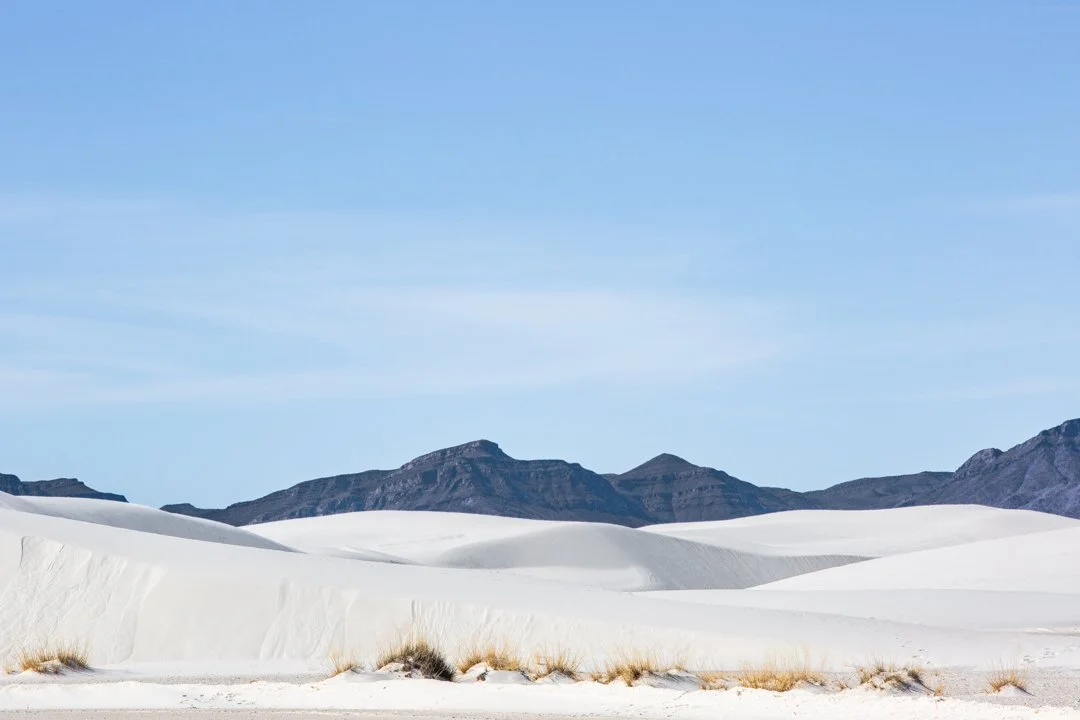
White Sands and Distant Mountains
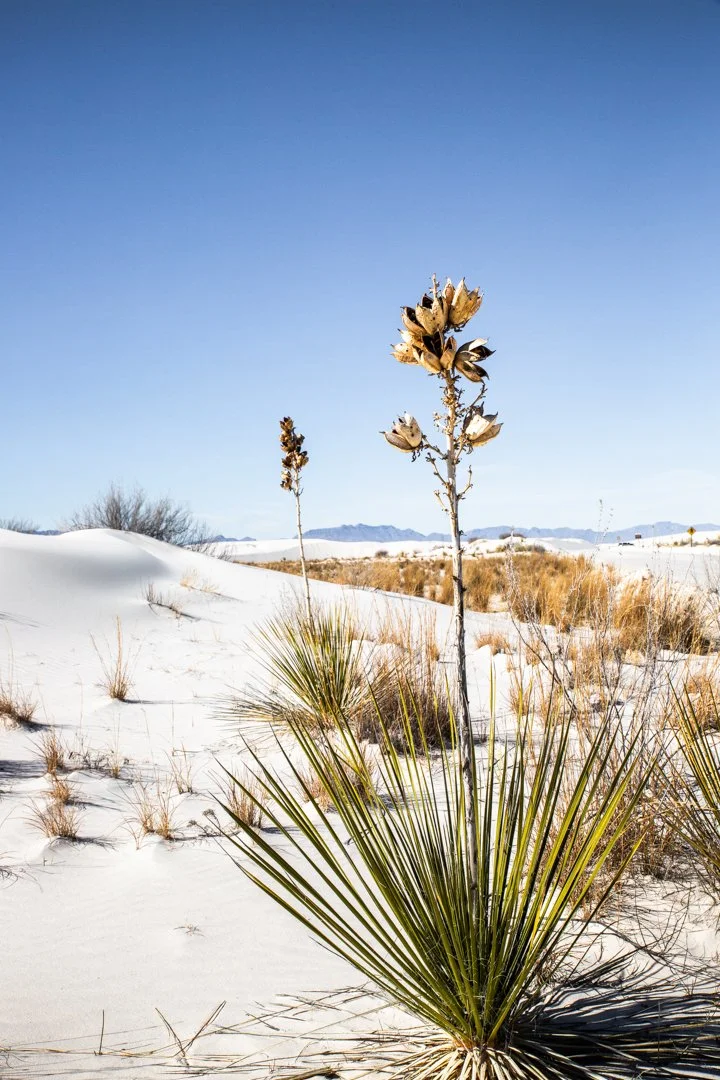
Yucca in White Sands
Looking Back
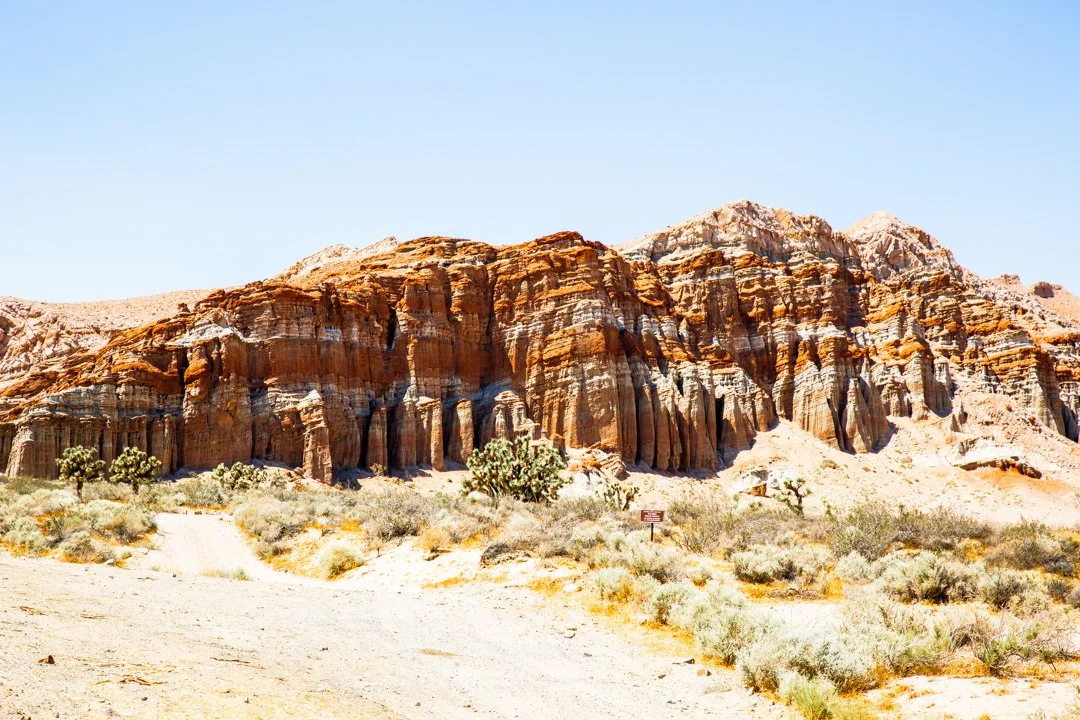
Red Rock Cliffs of the Southwest
When these photographs were created, I wasn’t building a collection.
I wasn’t planning a fine art photography business.
In many ways, I was simply giving myself permission to photograph for the joy of it.
After years of focusing primarily on weddings, these trips allowed me to slow down and reconnect with ideas I later explored in From Observation to Stillness.
The images were edited and archived, remaining largely unseen for years.
For years, they remained largely unseen.
When I began building this new chapter of my work as a fine art photographer, I returned to those archives with fresh eyes.
What I discovered was a body of work connected by the same themes that continue to guide my photography today:
Light.
Form.
Texture.
Stillness.
The photographs reminded me that the landscapes I return to most often are not necessarily the loudest or the most dramatic.
They are the photos that reward observation.
The ones that reveal themselves slowly.
The ones that invite us to pause.
Perhaps that is what I love most about the American Southwest.
Its beauty is not found in spectacle alone.
It is found in the quiet geometry of stone, sand, light, and time—enduring shapes that call us to stop, look deeply, and remember that beauty is often found when we are most willing to listen.
Explore the Southwest Collection
The photographs in this collection were created across the Mojave Desert, Grand Canyon, Chaco Canyon, and White Sands National Park. Together, they explore light, form, texture, and the quiet beauty of the American Southwest.
A New Chapter — Introducing Fine Art Photography Prints
Over several years, I’ve been building a body of work shaped by light, atmosphere, and place. What began alongside my work in wedding photography has evolved into something more personal — a quieter, more intentional way of seeing.
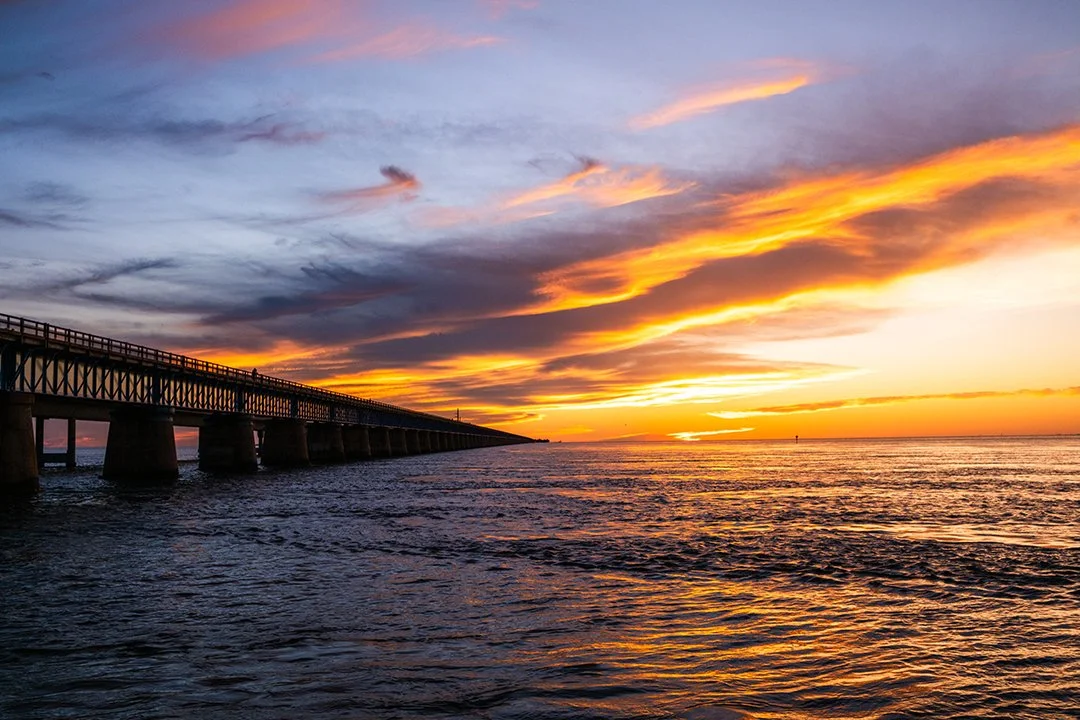
Seven Mile Bridge at Dusk
Over several years, I’ve been building a body of work shaped by light, atmosphere, and place. What began alongside my work in wedding photography has evolved into something more personal — a quieter, more intentional way of seeing.
From Weddings to Fine Art
For many years, my work was centered around documenting moments. That chapter remains meaningful to me. It shaped the way I observe, anticipate, and compose. But over time, my focus shifted.
I found myself drawn to stillness — to landscapes, to architecture, to environments shaped not by a moment, but by time itself. What began as a personal practice slowly became a defined body of work.
The Work
White Sands and Distant Mountains
This collection is guided by a simple idea: how an image lives within a space. Each photograph is composed with restraint, emphasizing light, form, and atmosphere. The intention is not to dominate a room, but to settle into it — to create a sense of balance, quiet, and presence.
Designed for Thoughtful Spaces
All works are offered as museum-quality giclée prints on archival paper. They are released as prints only — allowing each piece to be framed in a way that reflects the space it enters. The focus remains on the image and its relationship to its environment.
The First Collections
The initial release introduces three collections, each defined by a distinct sense of place.
Tide & Light reflects the shifting tones and textures of the Florida Keys.
Southwest explores sculpted desert forms and the interplay of light across stone.
Quiet Horizons moves toward minimal, atmospheric scenes captured across parts of Europe.
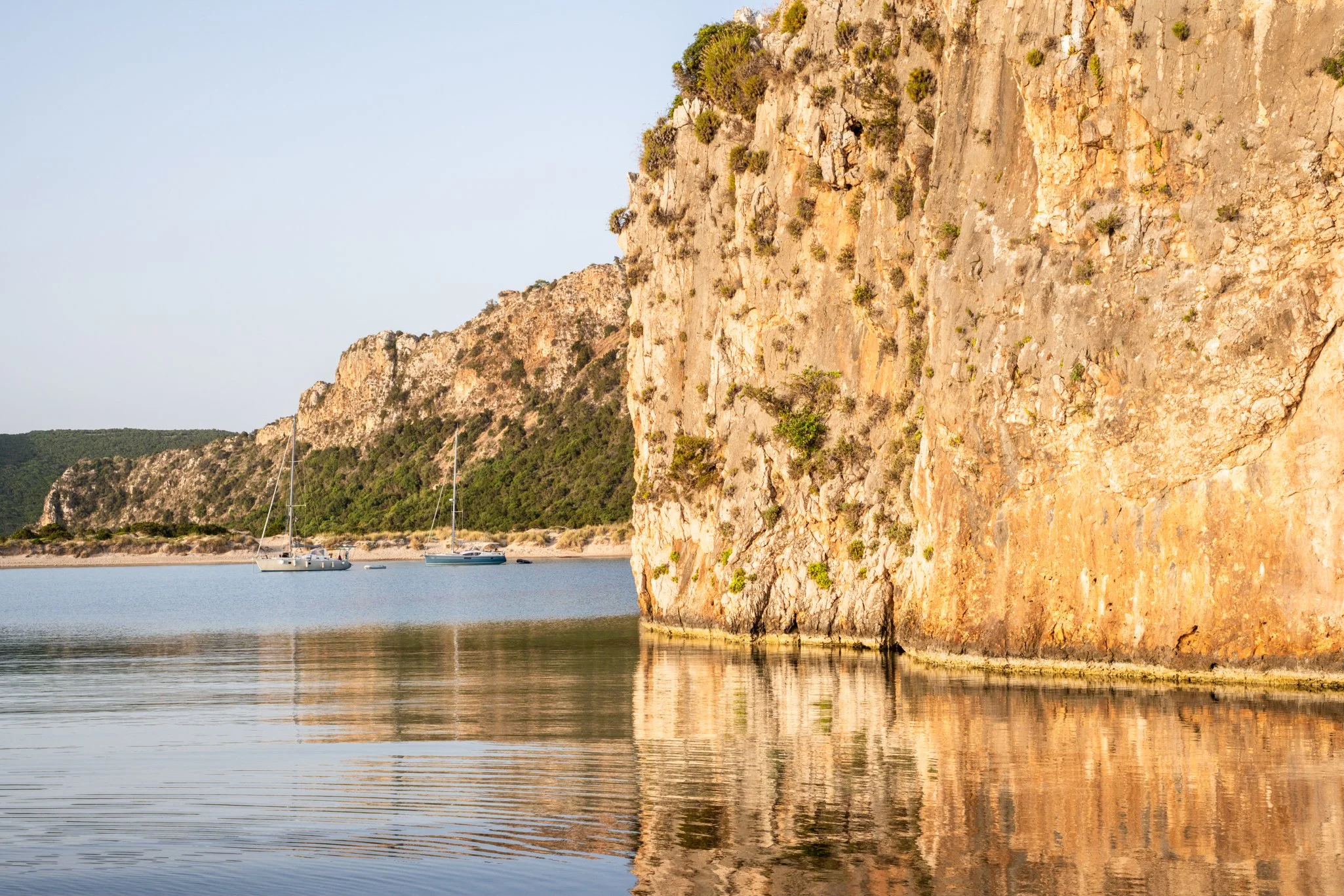
Voidokilia Reflection
Launching April 15
The full collection will be released on April 15.
Early access subscribers will receive a first look ahead of the public launch.
Thank you for being here at the beginning of this new chapter.
— Antonio